
How Much Should You Spend on an Electric Dirt Bike? Complete Buying Guide
An electric dirt bike price can range from several hundred dollars for a small youth model to several thousand dollars for a full-size, high-performance e-moto. That range makes it difficult to know whether you are finding a bargain, paying for useful performance, or spending money on features you may never use.
The right budget depends on more than top speed. Rider size, terrain, battery capacity, suspension, braking, durability, warranty coverage, and post-purchase support all affect the real value of a bike.
This guide explains the main electric dirt bike price ranges, what drives the cost, how cheap and premium models differ, and how much an adult rider should realistically plan to spend. We will also compare our current NATKIE lineup and explain how Klarna, Afterpay, and other payment choices can help eligible buyers manage the upfront cost.
1. Electric Dirt Bike Price Ranges
There is no single correct electric dirt bike cost. A useful starting point is to divide the market into three broad categories.
| Category | Planning Price Range | Usually Best For |
|---|---|---|
| Compact and basic recreational models | $500–$1,200 | Smaller or less-experienced riders, supervised practice, and lower-speed recreational use |
| Entry-level adult and capable compact models | $1,800–$3,000 | Riders developing their off-road skills, weekend trail use, and riders moving up from smaller electric bikes |
| High-performance electric dirt bikes | $3,000–$6,000+ | Experienced riders, full-size ergonomics, technical terrain, and stronger performance requirements |
These are planning ranges rather than fixed market rules. Bike size, component quality, intended use, brand support, and temporary promotions can move an individual model above or below its category. Our electric dirt bike financing guide uses similar ranges to help buyers understand the difference between compact recreational, entry-level adult, and high-performance models.
A lower price is not automatically a better value. Likewise, the most expensive model is not automatically the right bike for every rider. Before deciding on an electric dirt bike budget, start with fit, experience, and the type of terrain you actually plan to ride.
New riders can use our electric dirt bike buying guide to evaluate rider size, power, battery range, suspension, brakes, and off-road use before comparing prices.
2. What Affects the Electric Dirt Bike Cost?
The major cost drivers are the powertrain, battery, chassis, suspension, brakes, wheels, safety systems, and the support available after the sale.
Motor and controller
Higher-output motors need controllers, chains, sprockets, frames, and braking systems that can manage the additional acceleration and load. Peak wattage is useful for comparison, but it should not be evaluated alone. Power delivery, rider control, terrain, and the strength of the complete drivetrain matter just as much.
A rider who prefers a compact platform or is developing off-road skills may not need the output of a full-size performance model. An experienced adult riding steeper or more technical trails may quickly outgrow a lower-powered bike.
Battery capacity
The battery is one of the most expensive components in an electric dirt bike. Larger-capacity batteries can support longer sessions and provide the energy needed by higher-output motors, but they also add cost and weight.
Published range figures should always be treated as estimates. Actual range can change with rider weight, terrain, speed mode, temperature, tire pressure, elevation, and throttle use.
Suspension, brakes, and frame
Off-road riding repeatedly loads the fork, rear shock, frame, wheels, brakes, and drivetrain. More capable models commonly use stronger frames, hydraulic braking systems, off-road suspension, larger wheels, and heavier-duty chains.
These components may not attract as much attention as motor power, but they have a direct effect on control and ride quality. A lower-priced bike with inadequate suspension or braking may be a poor value for aggressive terrain, even when its advertised speed looks competitive.
Bike size and rider fit
Compact bikes generally cost less to manufacture than full-size machines, but the least expensive bike is not a bargain when it is too small for the rider.
Check the stated rider-height range, wheel configuration, maximum load, and overall bike weight. Adult riders should also consider how easily they can stand on the pegs, move their body over rough terrain, and control the bike at low speed.
Warranty, shipping, and support
The purchase price is only one part of the ownership cost. Before ordering, review what is covered, how long different components are covered, how replacement parts are handled, and whether labor is included.
Our warranty policy uses component-specific coverage periods rather than one identical period for every part. Our shipping information also explains current delivery coverage, processing estimates, address changes, cancellations, and possible fees after shipment.
3. Cheap vs Premium Models
A cheap electric dirt bike can make sense for supervised learning, occasional use, or a smaller rider whose needs are limited. Problems arise when a shopper chooses a bike based only on the lowest advertised price.
| Factor | Lower-Cost Model | Premium or Higher-Performance Model |
| Intended rider | Often designed for compact fit, lighter use, or developing riders | Often designed for larger or more experienced riders |
| Motor and battery | Lower output and capacity | Higher output and larger energy capacity |
| Suspension | Simpler recreational setup | More capable off-road components |
| Brakes and drivetrain | Designed for lighter loads | Designed for stronger acceleration and harder riding |
| Wheel and frame size | More compact | Mid-size or full-size |
| Best use | Skill development and lighter recreation | Longer sessions and more demanding terrain |
| Upfront cost | Lower | Higher |
Price alone does not prove build quality. A model should be evaluated as a complete system. Confirm that its battery, brakes, suspension, frame, wheel size, rider fit, warranty, and intended terrain all support the way you plan to use it.
A cheap model becomes expensive when it needs to be replaced because the rider outgrows it, the range is insufficient, or the chassis is not appropriate for the terrain. At the same time, a premium model may be unnecessary when a rider would be more comfortable and confident on a smaller, easier-to-manage platform.
The best value is therefore not the lowest electric dirt bike price. It is the lowest total cost for a bike that safely and realistically meets the rider’s needs.
4. Recommended Electric Dirt Bike Budget for Adult Riders
For most adults shopping for a real off-road e-moto, a practical electric dirt bike budget is approximately $2,000 to $4,000.

This is a planning recommendation, not a universal rule. The lower end can cover capable compact or mid-size bikes for riders developing their off-road skills. The upper end gives buyers access to full-size dimensions, larger batteries, stronger drivetrains, and performance intended for experienced riders.
Budget around $1,800–$2,500 when:
You are developing your off-road skills, fit comfortably on a compact or mid-size frame, and primarily want weekend trail riding or controlled off-road recreation.
At this budget, focus on correct rider fit, usable riding modes, hydraulic brakes, suitable suspension, and enough battery capacity for your normal session. Do not sacrifice fit or braking quality simply to obtain the highest advertised top speed.
Budget around $3,500–$5,000 when:
You need a full-size bike, regularly ride technical terrain, want larger wheels, or have enough off-road experience to benefit from a higher-output powertrain.
The additional cost should buy relevant capability—not just a larger number in the motor specification. Look for improvements in frame construction, suspension, drivetrain, battery capacity, ergonomics, and control.
Leave room for ownership expenses
Your bike should not consume the entire riding budget. Allow for a full-face helmet, boots, gloves, knee protection, body protection, basic tools, replacement wear items, transportation to legal riding areas, and any permits required where you ride.
A slightly less expensive bike with proper safety gear and a manageable ownership budget is usually a better decision than stretching every available dollar toward the bike alone.
5. NATKIE Models Comparison
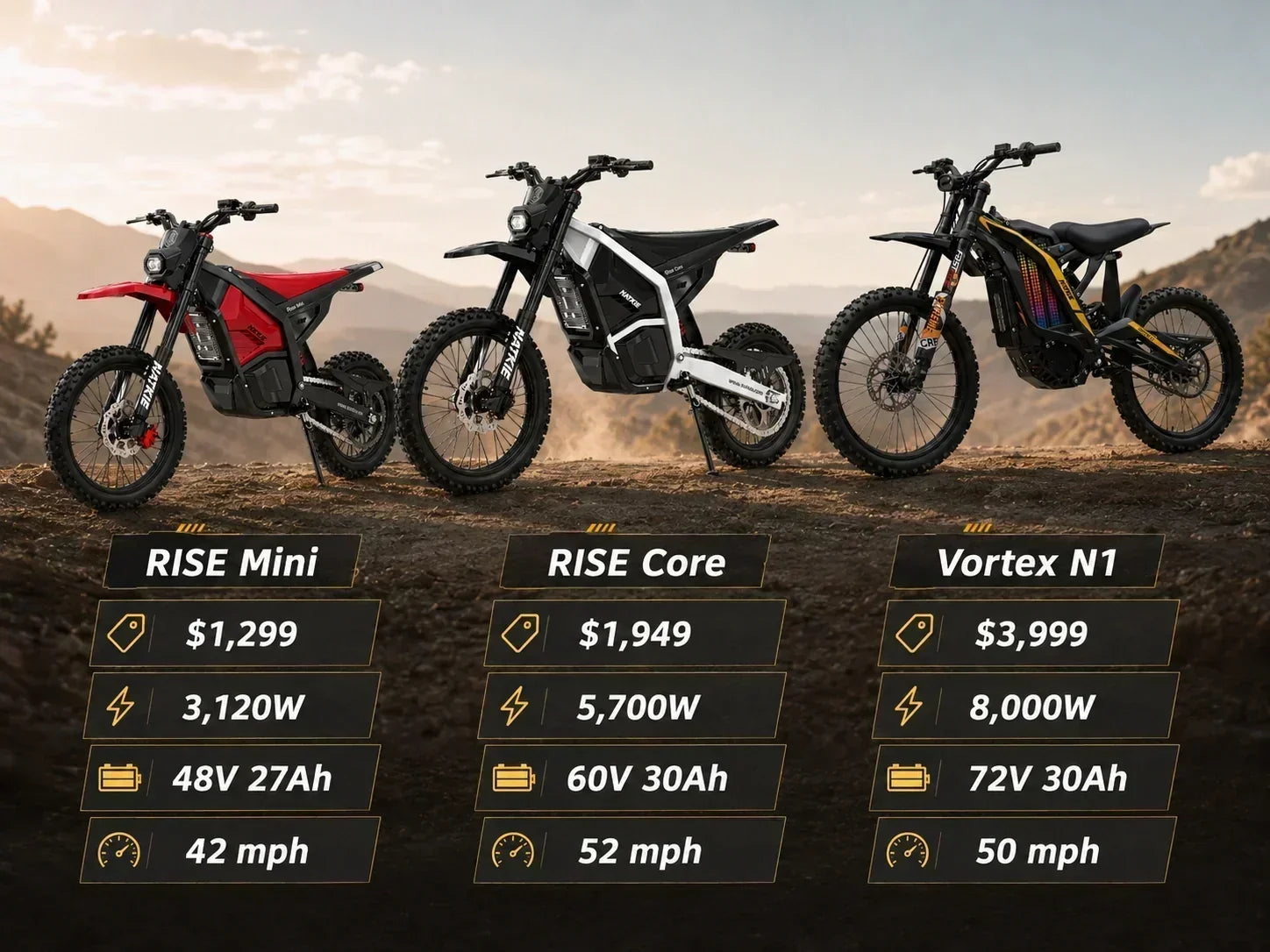
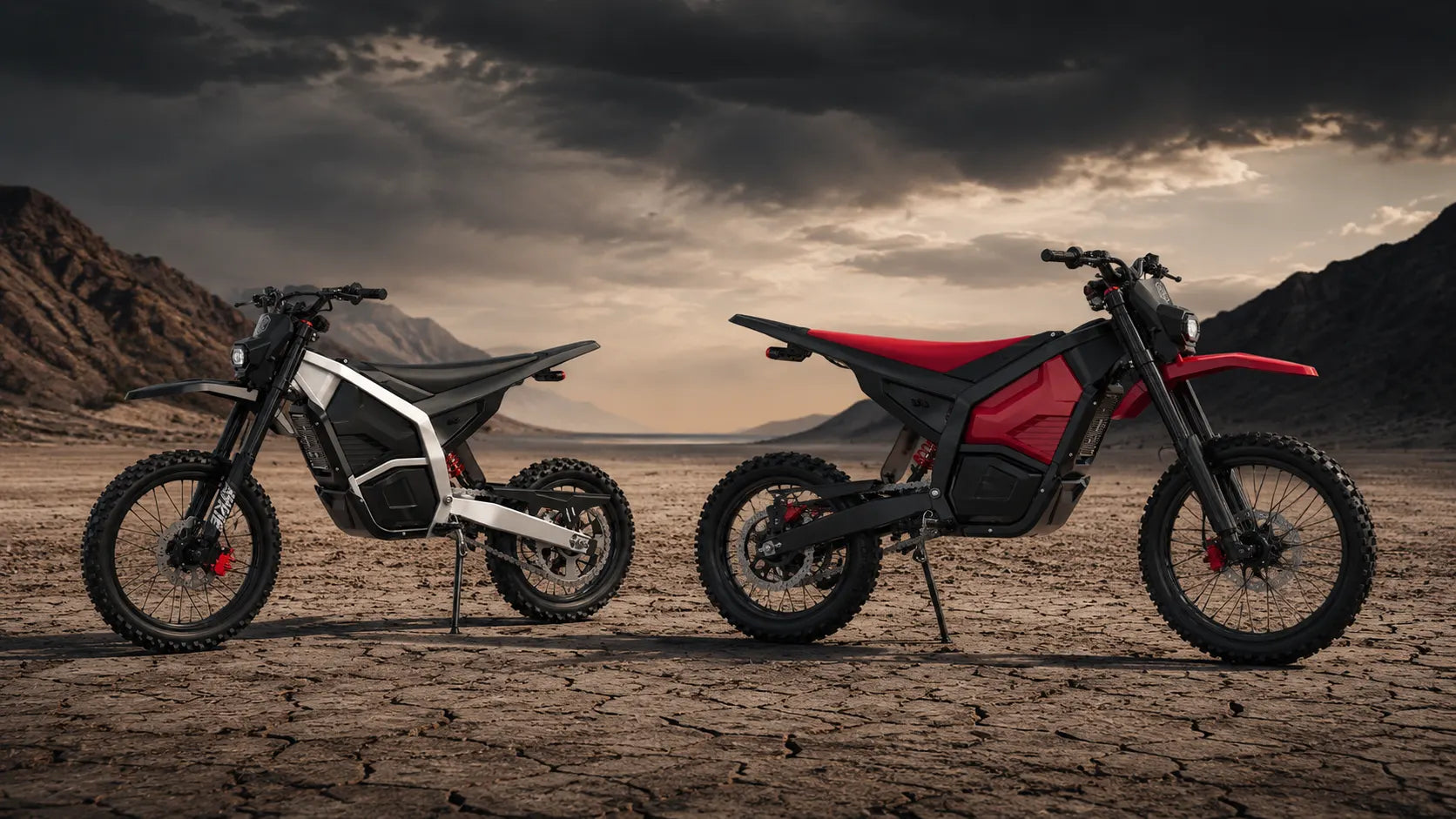
Our lineup covers three different rider and budget levels. The table below shows our current listed prices and specifications. Prices, promotions, inventory, and checkout totals can change, so confirm the final amount before ordering.
| Model | Current Listed Price | Peak Motor | Battery | Published Range | Top Speed | Rider Fit | Best Match |
| NATKIE RISE Mini | $1,299 | 3,120W | 48V 27Ah | 20–55 miles | 42 mph | 4'6"–6'0" | Riders who want a compact and maneuverable platform |
| NATKIE RISE Core | $1,949 | 5,700W | 60V 30Ah | 30–62 miles | 52 mph | 4'8"–6'4" | Riders seeking a versatile mid-size option |
| NATKIE Vortex N1 | $3,999 | 8,000W | 72V 30Ah | 35–60 miles | 50 mph in Sport mode | 5'5"–6'5" | Experienced riders wanting a full-size platform |
The RISE Mini product page currently shows a 14-inch front and 12-inch rear wheel setup, a maximum load of 265 pounds, and a bike weight of 125 pounds. The RISE Core uses 17-inch front and 14-inch rear wheels, supports up to 330 pounds, and currently weighs 143 pounds. The Vortex N1 uses 19-inch front and rear wheels, supports up to 264 pounds, and has a listed bike weight of 123 pounds.
RISE Mini: Lowest upfront cost
The RISE Mini is the lowest-priced model in our current lineup. Its compact sizing makes it a logical starting point for riders who value maneuverability, prefer a smaller platform, or are developing their off-road skills.
A compact design does not reduce the need for careful preparation. With a published top speed of 42 mph, riders still need appropriate training, protective equipment, supervision where necessary, and a controlled off-road environment.
RISE Core: Balanced adult budget
The RISE Core sits near the center of the recommended adult budget. Its larger wheel configuration, 60V 30Ah battery, 5,700W peak motor, and stated 4'8"–6'4" rider range make it the most broadly sized option in the lineup.
It is a practical model to consider when the RISE Mini feels too compact but a full-size flagship bike exceeds the buyer’s performance needs or budget.
Vortex N1: Full-size premium choice
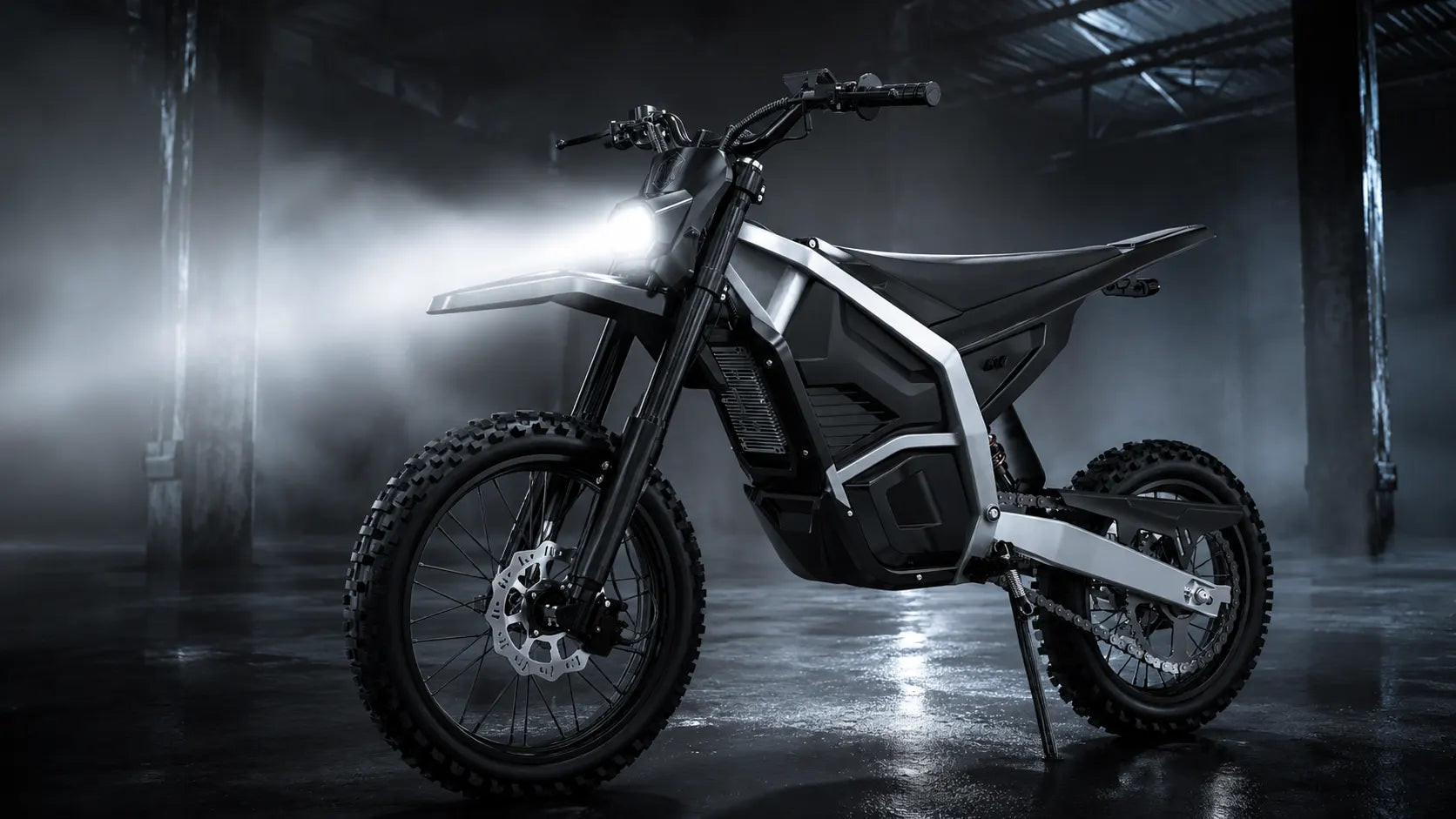
The Vortex N1 is our full-size model. It combines 19-inch wheels, a 72V 30Ah battery, an 8,000W peak mid-drive motor, a 6061 aluminum-alloy frame, and sizing intended for riders from 5'5" to 6'5".
Its higher electric dirt bike cost is most relevant to experienced adult riders who can use the full-size ergonomics and stronger powertrain. New riders should not choose it solely because it is the most powerful or expensive model.
For a side-by-side view, use our NATKIE electric dirt bike comparison. You can also learn more about why we built three distinct sizes on the About NATKIE page.
6. Payment Options
A suitable bike should fit both your riding needs and your finances. Paying in full may produce the simplest ownership experience because there are no future installments to manage. Eligible buyers may also see Klarna or Afterpay during NATKIE checkout.
Klarna
Klarna may present Pay in 4 or monthly financing options, depending on the order, customer eligibility, location, and Klarna’s approval process. The exact schedule, interest rate, fees, credit requirements, and total repayment amount are shown by Klarna before the purchase is completed.
Klarna’s current U.S. information describes Pay in 4 as four interest-free payments collected every two weeks when payments are made on time. Its general financing information also describes longer monthly options, but available terms vary by product and approval. Always use the terms displayed for your specific transaction rather than assuming that a plan seen in an advertisement will be available at checkout.
Afterpay
Afterpay is also displayed as a payment option on NATKIE’s current site. Its standard Pay in 4 service divides an approved purchase into scheduled installments, and Afterpay makes its own approval decisions. It does not approve every order, and the amount a customer can spend may depend on factors such as account history, open orders, available funds, and the value of the new purchase.
Financing and BNPL are not exactly the same
A short Pay in 4 plan generally spreads the balance over several weeks. Longer financing plans may use monthly payments and may involve interest, a different credit review, or additional lending terms.
Do not compare plans only by the payment amount. Review:
- The total amount you will repay
- Interest and finance charges
- Late or missed-payment fees
- The payment dates
- Whether a credit inquiry or credit reporting may apply
- What happens after a return or canceled order
- Whether taxes or other checkout costs are included
- Whether the scheduled payments fit your normal monthly budget
Before using BNPL to manage an electric dirt bike price and payment plan, review the Federal Trade Commission’s guidance on fees, automatic payments, refunds, missed payments, and possible credit consequences. The Consumer Financial Protection Bureau similarly advises shoppers to read the loan documents and understand all charges before accepting a plan.
Returns can require coordination between the retailer and payment provider. Review the merchant’s return policy and the lender’s procedures before financing a large purchase. Continue making required payments until the provider confirms that the schedule has been adjusted or canceled.
Our Buy Now, Pay Later page explains the current checkout process. The payment options and terms shown at checkout will apply to your order.
Choose the Bike First, Then Choose How to Pay
A good electric dirt bike budget begins with fit and riding needs—not the maximum amount a payment provider is willing to approve.
For most adults, approximately $2,000 to $4,000 is a realistic starting budget. Compact or newer riders may find the capability they need near the lower end. Experienced riders who need a full-size platform may need to plan closer to the upper end.
Compare the RISE Mini, RISE Core, and Vortex N1 based on rider size, terrain, experience, and useful performance. Then review our warranty coverage, shipping information, and available payment options before completing your order.
All NATKIE models are designed for off-road use. Ride only on private property, closed-course tracks, or designated riding areas where the vehicle is legally permitted, and always use appropriate protective equipment.
Share: