
First Ride on an Electric Dirt Bike: 7 Skills Every Beginner Should Practice
Your first electric dirt bike ride should not be about seeing how fast the bike can go. It should be about learning how the bike responds, building confidence, and developing a few basic habits that make every future ride easier.
Electric dirt bikes can feel surprisingly different from bicycles, scooters, and gas-powered motorcycles. Electric motors can respond quickly, power delivery can feel immediate, and there is much less engine sound than on a gas-powered dirt bike. The combination of bike weight, suspension, brakes, and changing off-road terrain can also take some time to understand.
The good news is that beginners do not need advanced riding skills on day one.
A flat, open, and permitted off-road practice area and a few simple exercises can teach you a lot about throttle control, braking, balance, turning, body position, and terrain awareness.
Here are seven skills every beginner should practice before moving on to faster or more technical riding.
1. Learn Smooth Throttle Control
The first skill to practice is also one of the most important: controlling the throttle smoothly.
Electric motors can deliver torque immediately. That responsiveness is one of the advantages of an electric dirt bike, but it can also surprise a new rider.
Instead of twisting the throttle aggressively, practice applying power gradually.
Start from a complete stop and slowly increase the throttle until the bike begins moving. Ride several meters, stop, and repeat.
Your goal is to understand where the motor begins delivering noticeable power and how small throttle movements affect acceleration.
If your bike offers different riding modes, your first electric dirt bike ride is usually a good time to begin with the lowest or least aggressive mode.
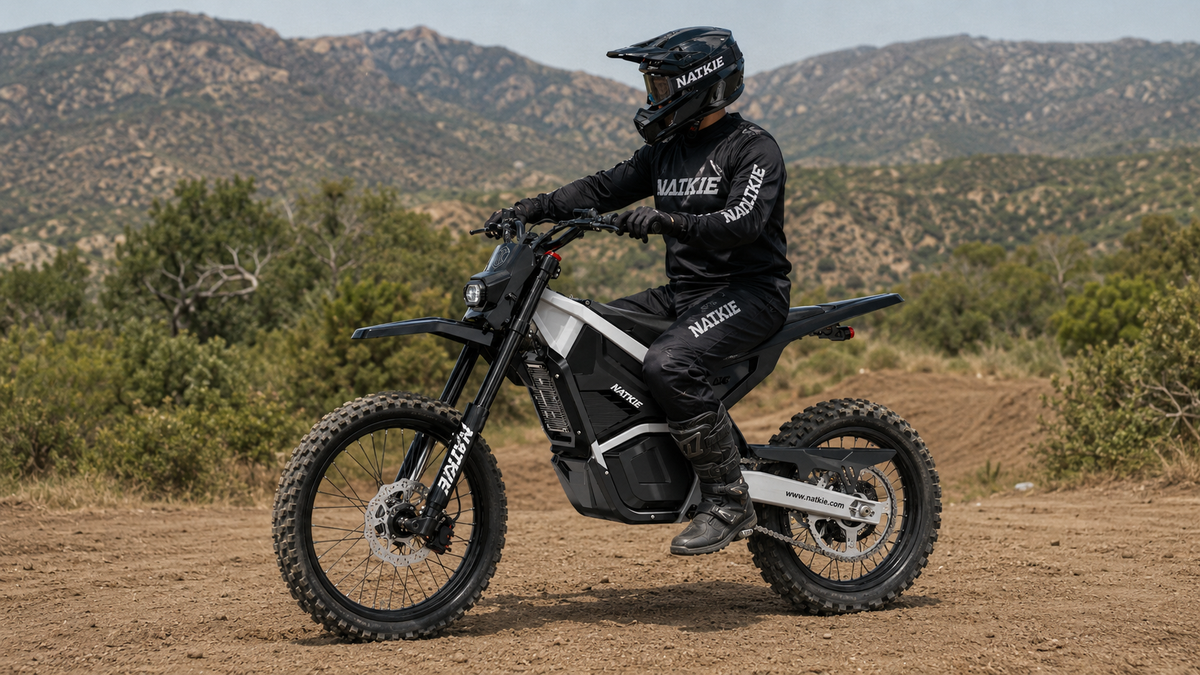
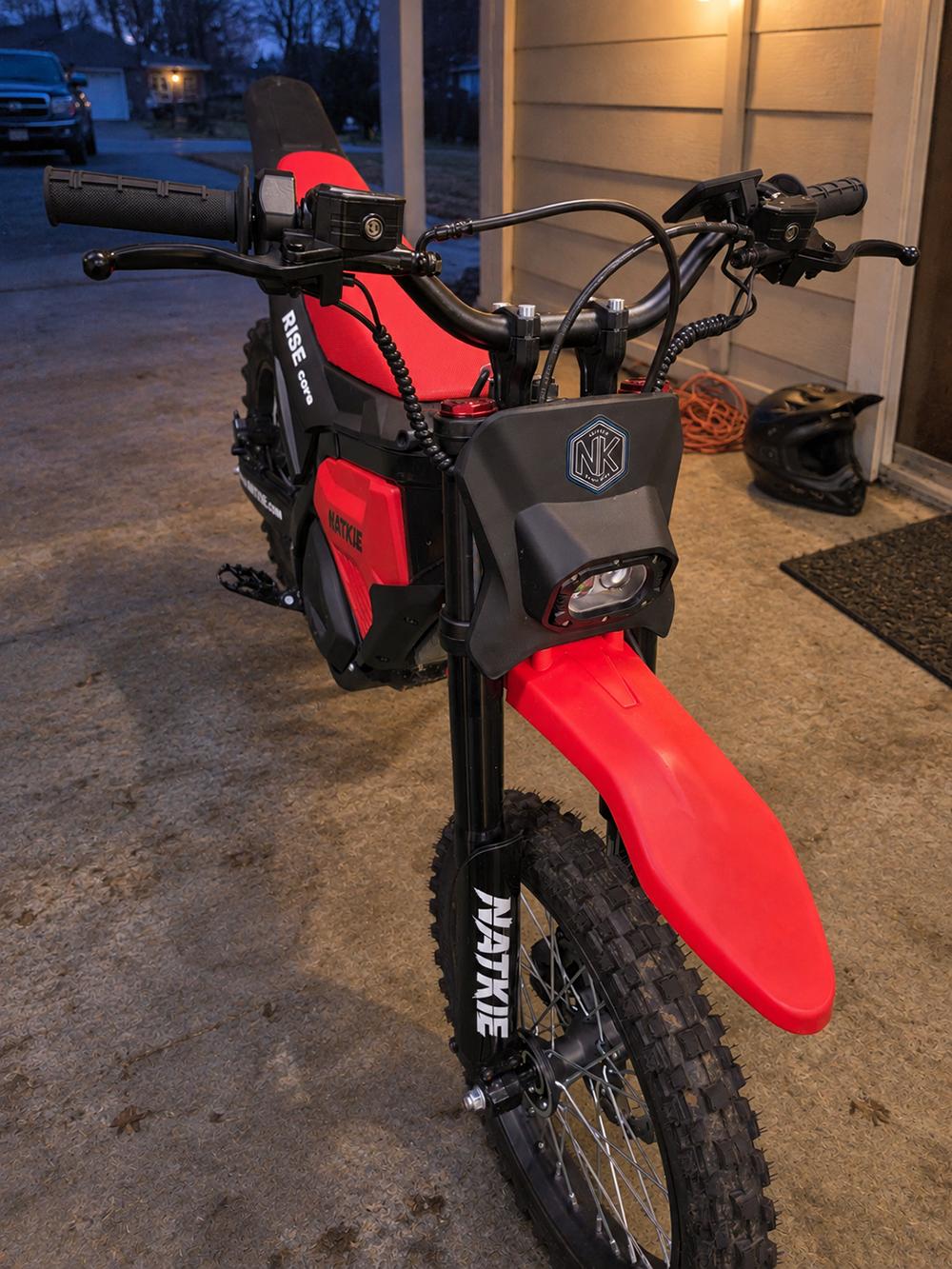
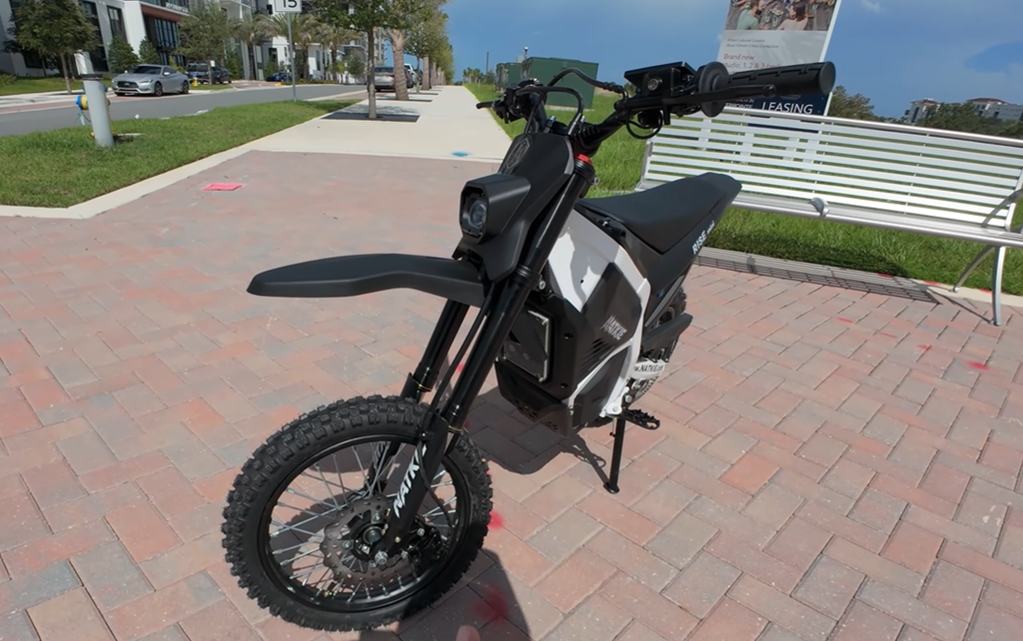
For example, our NATKIE RISE Mini provides three speed modes plus reverse, allowing riders to select a level that better matches their experience and riding conditions.
As your control improves, you can gradually become more comfortable with stronger acceleration.
2. Practice Controlled Starts and Stops
Once you understand the throttle, practice combining acceleration and braking.
Choose two points in an open practice area.
Accelerate smoothly from the first point, maintain a moderate speed, and begin braking well before reaching the second point.
Repeat the exercise several times.
Do not focus on stopping as quickly as possible. Instead, focus on making every start and stop predictable.
A beginner should practice being able to:
- start without sudden acceleration
- maintain a consistent speed
- release the throttle smoothly
- apply the brakes progressively
- come to a controlled stop
This simple exercise creates the foundation for almost everything else you will do on the bike.
3. Learn How to Use Both Brakes
New riders sometimes rely too heavily on one brake.
Instead, practice using both brakes in a controlled way.
The front brake provides significant stopping power, while the rear brake can help stabilize the bike. The exact balance will depend on speed, terrain, traction, and the bike itself.
Begin at low speed on a flat surface.
First, become familiar with how the brakes respond. Then gradually practice stronger braking while keeping the bike upright.
Avoid suddenly grabbing a brake lever, especially on loose dirt, gravel, mud, or other low-traction surfaces.
The Motorcycle Safety Foundation’s DirtBike School teaches braking, throttle control, balance, and other basic off-road riding skills in a controlled training environment. Its guidance also emphasizes smooth brake application and learning to use the motorcycle’s controls before progressing to more difficult riding.
Remember that braking performance can feel very different on dirt compared with pavement.
4. Practice Slow-Speed Balance
Speed can sometimes hide poor balance. Slow riding exposes it.
Find a flat area and try riding as slowly as possible while keeping the bike stable and looking ahead.
You may initially feel the bike moving slightly from side to side. That is normal.
Try to stay relaxed rather than making large corrections.
Slow-speed riding helps develop:
- balance
- throttle precision
- brake coordination
- steering control
- confidence with the bike's weight
This skill becomes especially useful on narrow trails, technical terrain, parking areas, tight turns, and sections where you need to carefully choose your line.
It is also a good way to determine whether the physical size and weight of your bike feel manageable.
5. Practice Wide Turns Before Tight Turns
Beginners often look directly at the ground or at the obstacle they are trying to avoid.
Instead, look toward where you want the bike to go.
Start with large circles in both directions.
Keep your speed low and your movements smooth. Once large circles feel comfortable, gradually reduce their diameter.
You can also create a simple figure-eight exercise.
Do not worry about making the tightest possible turn. The objective is to coordinate your eyes, steering, throttle, balance, and body position.
If you constantly stare at the front wheel, controlling the bike becomes much harder.
Looking farther ahead gives you more time to process the terrain and helps your movements become smoother.
6. Learn Basic Standing Position
You may spend your first few minutes sitting, but off-road riders should also become comfortable standing on the footpegs.
Standing allows your arms and legs to help absorb changes in terrain and gives the bike more freedom to move beneath you.
Start at very low speed on an easy surface.
Stand with:
- knees slightly bent
- elbows relaxed
- hands comfortably on the controls
- weight centered
- head up and looking forward
Avoid locking your knees or holding the handlebars too tightly.
Your body should remain relatively relaxed while the bike moves underneath you.
You do not need to immediately ride difficult trails while standing. Simply practice switching smoothly between sitting and standing.
Before trying new riding techniques, it is also worth reviewing the instructions specific to your bike. NATKIE owners can find model-specific operating and setup information through our User Manuals page.
7. Practice Reading the Terrain
One of the biggest differences between riding on a smooth surface and riding off-road is that the ground constantly changes.
You may encounter:
- loose dirt
- gravel
- rocks
- small ruts
- bumps
- wet sections
- roots
- slopes
- changes in traction
Beginners often make the mistake of reacting to obstacles at the last second.
Instead, develop the habit of looking ahead. Scan the terrain and choose a clear path before you reach an obstacle.
For your first rides, avoid deliberately searching for difficult terrain. Start with relatively smooth dirt and gradually introduce small bumps and uneven sections.
The objective is to understand how the suspension, tires, and bike respond.
Once you become comfortable with basic terrain changes, you can progress gradually rather than jumping directly into technical trails.
MSF also recommends riding dirt bikes in appropriate off-highway areas and using designated trails while following posted rules.
Do a Quick Bike Check Before Your First Ride
Riding skills are only part of preparing for your first electric dirt bike ride.
Before starting, check the basic condition of the bike.
Pay particular attention to:
- tire condition and pressure,
- brakes,
- chain or drivetrain,
- battery charge,
- wheels and axles,
- visible fasteners,
- throttle operation,
- and suspension.
Also make sure the riding area is suitable and that riding an electric dirt bike is permitted there.
A previous NATKIE guide on electric dirt bike maintenance covers these pre-ride checks in more detail, and your specific model manual should always be the primary reference for operating and maintenance instructions.
Wear Proper Riding Gear
Even when practicing at low speed, use appropriate protective equipment.
Riders should wear a properly fitted DOT-compliant helmet, eye protection or goggles, gloves, long protective clothing, and sturdy over-the-ankle riding boots. Depending on the riding environment, additional knee, elbow, chest, or body protection can also be considered.
A beginner practice session may feel slow and controlled, but dirt surfaces can still be unpredictable. Protective equipment should become a habit from the first ride rather than something you only wear once you begin riding faster.
Take Your Time
There is no reason to master all seven skills in a single session.
A beginner may spend an entire first ride simply practicing smooth acceleration, braking, and wide turns.
That is completely fine.
Progressive practice is much more useful than trying to ride fast before basic control becomes automatic.
A simple progression might look like this:
Session 1: throttle, starts, stops, braking
Session 2: slow-speed control and large turns
Session 3: figure eights and standing position
Session 4: easy off-road terrain and obstacle awareness
Once these skills feel natural, you can gradually increase speed and terrain difficulty.
Final Thoughts
Your first electric dirt bike ride should be about control rather than performance.
Learning smooth throttle inputs, controlled braking, slow-speed balance, turning, standing position, and terrain awareness creates a much stronger foundation than immediately testing maximum speed or power.
Every rider develops at a different pace. Start on easy terrain, use an appropriate riding mode, wear protective equipment, and gradually increase the difficulty as your confidence improves.
The better your basic habits become at low speed, the easier it will be to control your electric dirt bike when the trail becomes faster, rougher, or more technical.
Off-Road Use Reminder
NATKIE electric dirt bikes are designed for off-road use only. They are not intended for public roads, sidewalks, bike lanes, pedestrian paths, or street commuting.
Ride only on private property with permission, closed-course dirt tracks, or designated OHV areas where this type of vehicle is legally allowed. Always check local rules, trail requirements, age restrictions, permits, and safety regulations before riding.
Share: