
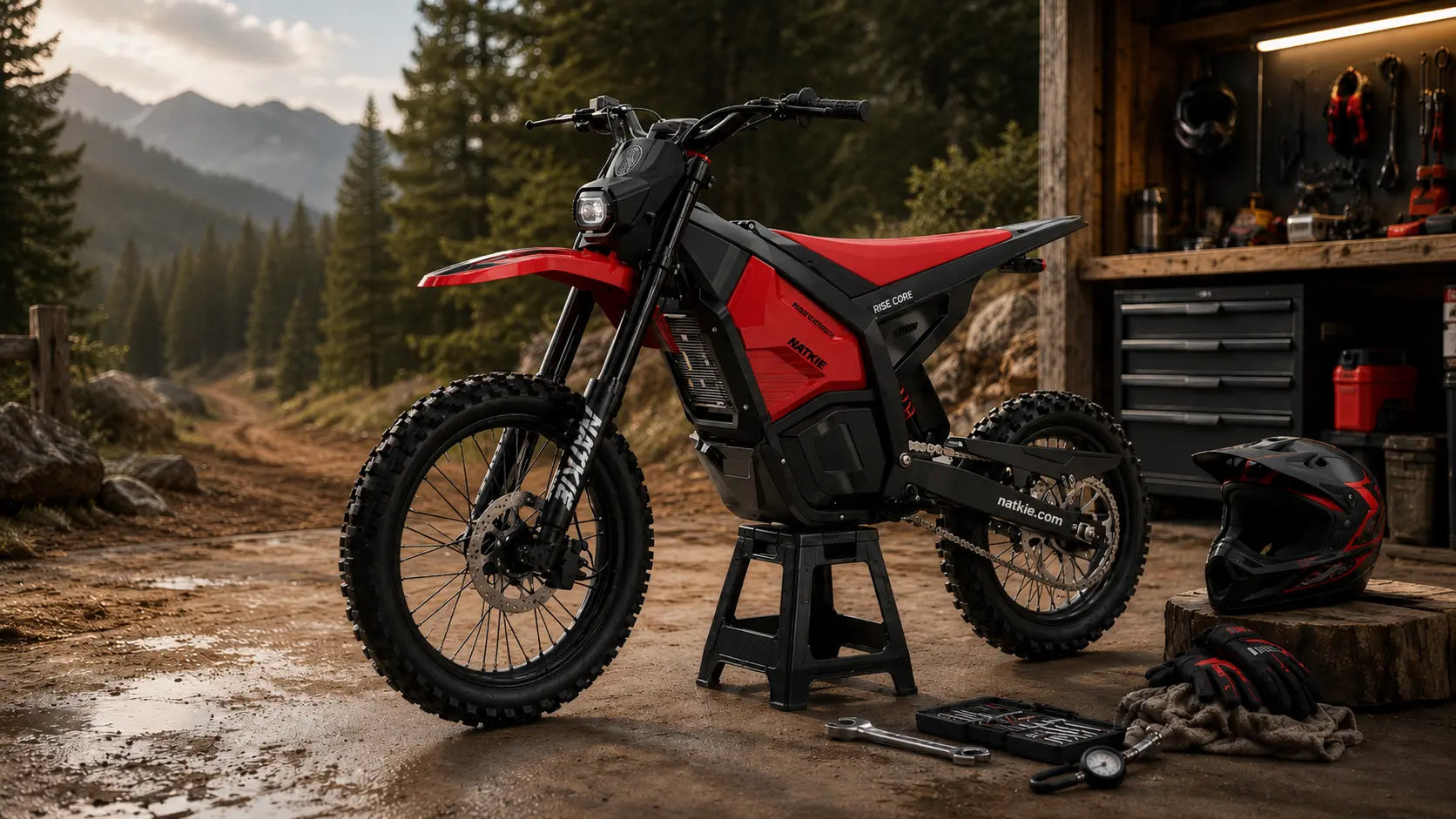
Electric Dirt Bike Maintenance Checklist: What to Check Before and After Every Ride
Electric dirt bikes are built to handle dust, bumps, loose terrain, and changing trail conditions, but that does not mean they should be ridden without regular checks.
A few minutes of electric dirt bike maintenance before and after each ride can help you spot loose parts, abnormal tire wear, brake issues, chain problems, or damage before a small issue turns into a bigger one.
The goal is not to perform a complete workshop service every time you ride. Instead, it is to develop a simple routine: inspect the components that affect safety and performance, keep the bike reasonably clean, and pay attention when something feels different.
This electric dirt bike maintenance checklist covers the main areas riders should inspect before hitting the trail and after returning home.
Electric Dirt Bike Maintenance Checklist at a Glance
| When | What to Check |
|---|---|
| Before every ride | Tires, brakes, chain, wheels, fasteners, suspension, battery, throttle and controls |
| After every ride | Dirt and debris, chain condition, tires, brake area, suspension, visible damage and moisture |
| Before charging | Battery and charger condition, connectors and charging environment |
| Periodically | Brake wear, drivetrain wear, spoke tension, suspension condition and major fasteners |
| Any time something feels wrong | Stop riding and inspect the bike before continuing |
Always use the specifications and maintenance instructions for your exact model. Tire pressure, fastener torque, adjustment procedures, and service intervals can differ between bikes, so a general checklist should never replace the owner's manual.
NATKIE riders can find model-specific instructions through our NATKIE User Manuals page.
1. Start Your Electric Dirt Bike Maintenance With the Tires
Tires are one of the first things worth checking because they are the bike's contact point with the trail.
Before riding, visually inspect both tires for cuts, embedded objects, unusual wear, damaged sidewalls, or anything else that looks different from the previous ride.
Then check tire pressure according to the recommendation for your specific bike and riding setup.
Do not assume that a tire is properly inflated simply because it looks normal. Pressure affects traction, handling, and how the tire reacts to rocks, roots, and other trail obstacles.
Also take a quick look at both wheels. If something appears loose, bent, damaged, or noticeably different, investigate it before riding.
2. Check the Brakes Before You Move
Brake performance should never be something you discover halfway down a trail.
Before every ride, squeeze both brake levers and make sure the response feels firm and predictable. A lever that suddenly feels unusually soft, pulls farther than normal, or produces noticeably weaker braking deserves attention before riding.
Visually inspect the brake area for obvious damage, contamination, or unusual wear.
You do not need to disassemble the system before every ride. The purpose of this quick check is to notice changes.
If braking performance has changed significantly or you see damage that you are not comfortable diagnosing, do not simply compensate by riding more slowly. Have the system inspected properly.
3. Inspect the Chain and Drivetrain
For a mid-drive electric dirt bike, the drivetrain transfers significant motor torque to the rear wheel.
That makes the chain an important part of regular electric dirt bike maintenance.
Before riding, look for excessive slack, unusual tightness, visible damage, or debris caught around the chain and sprockets. Rotate the wheel slowly and check whether the chain moves smoothly.
After a dusty or muddy ride, inspect the drivetrain again.
Cleaning accumulated dirt and maintaining the chain according to the manufacturer's instructions can help keep the drivetrain operating smoothly.
Avoid randomly adjusting chain tension if you are unsure of the correct specification. Too loose and too tight can both create problems, so follow your model's manual.
4. Check Wheels, Axles and Important Fasteners
Off-road riding creates repeated vibration and impacts.
That is why a basic pre-ride inspection should include a quick check of components such as the handlebars, wheels, axles, foot pegs, controls, and other visible fasteners.
You are mainly looking for something that has clearly shifted, loosened, or developed unexpected play.
Do not treat this as an invitation to overtighten every bolt before every ride. Fasteners should be tightened according to the correct specifications for the bike.
If you are unsure about a torque specification, check the owner's manual rather than guessing.
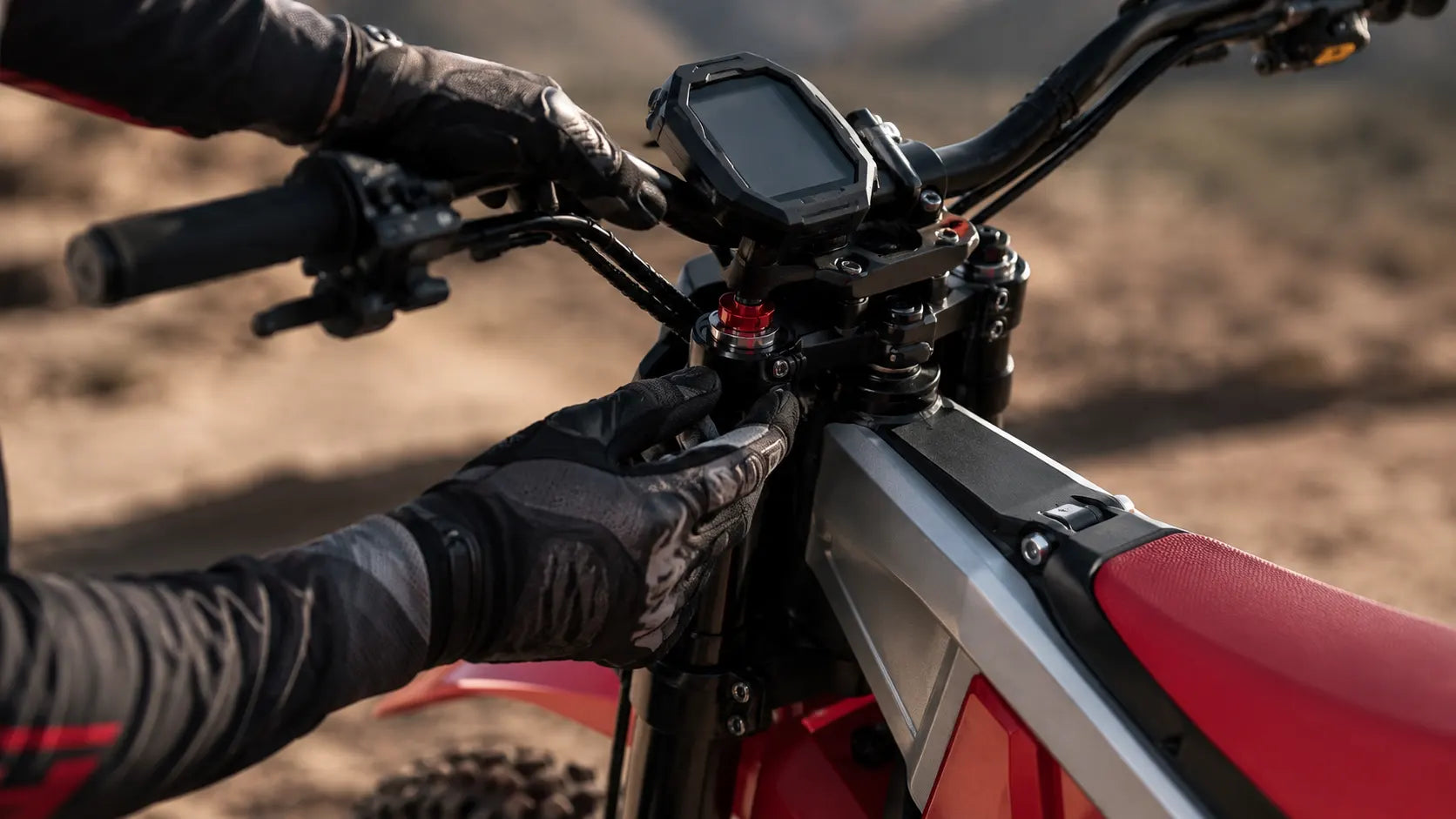
5. Give the Suspension a Quick Check
Suspension works constantly when an electric dirt bike is ridden off-road.
Before riding, compress the front and rear suspension and pay attention to how it moves. The action should feel smooth rather than obviously stuck or irregular.
Look around the fork and rear shock for visible damage, excessive dirt buildup, or signs of leakage.
After riding through mud or dusty terrain, cleaning exposed suspension surfaces can also make it easier to notice developing problems.
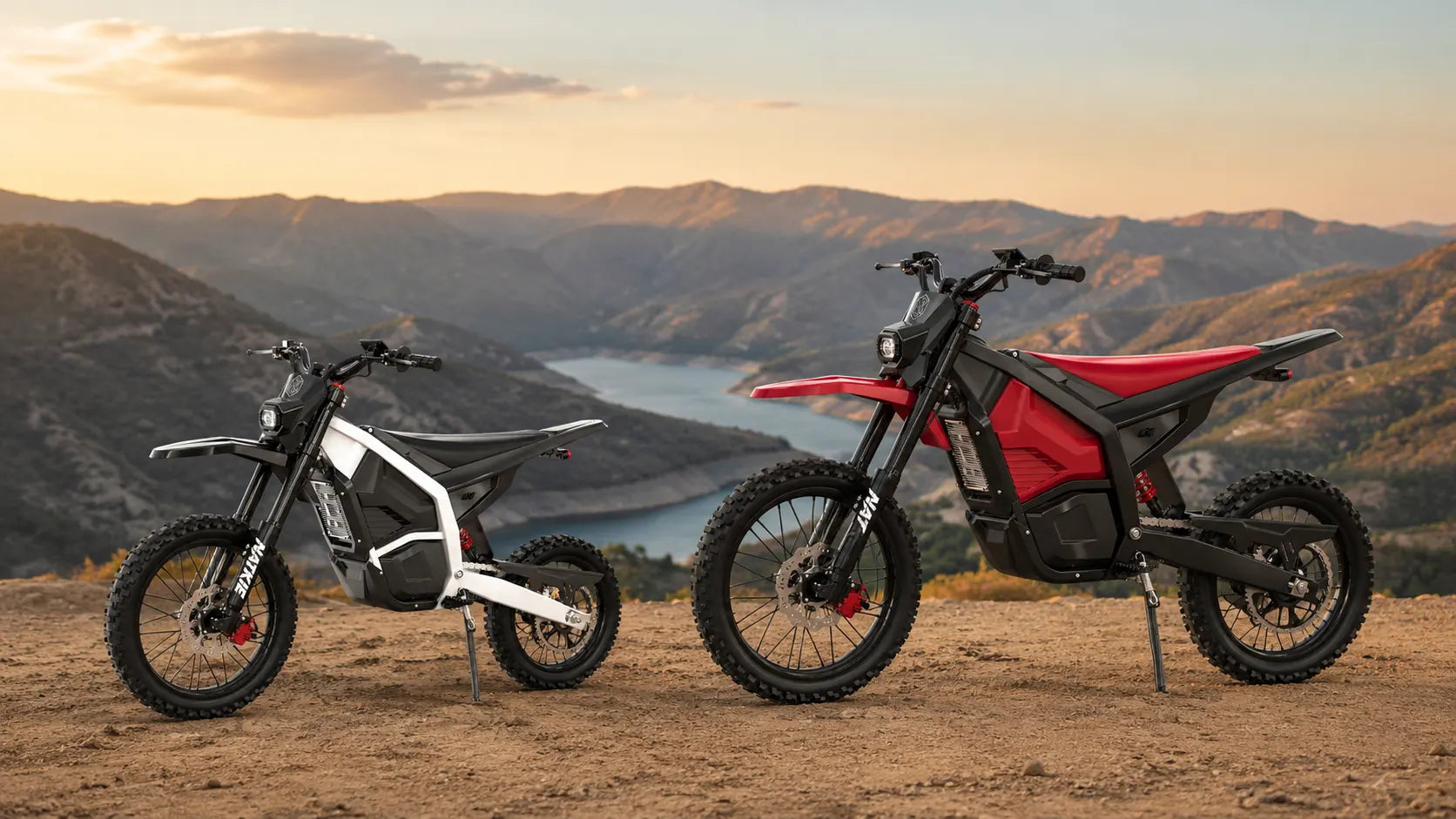
Our RISE Mini, for example, uses hydraulic front suspension and a rear shock absorber, while the larger RISE Core uses an off-road hydraulic inverted fork and rear aluminum shock. The exact inspection and adjustment procedures therefore depend on the bike.
6. Check the Battery Before Every Ride
Battery inspection should be simple but consistent.
Before riding, make sure the battery is properly installed and that the visible casing, connectors, and surrounding wiring do not show obvious damage.
Do not ride with a lithium-ion battery that appears physically damaged, swollen, unusually hot, or otherwise abnormal.
Charging practices are equally important.
The U.S. Consumer Product Safety Commission recommends following the manufacturer's charging instructions, using only the charger supplied with or recommended for the product, remaining present while charging, and avoiding charging while sleeping or away from home.
For additional battery safety information, riders can review the U.S. Consumer Product Safety Commission's micromobility safety guidance.
7. Test the Throttle, Display and Controls
Before heading onto the trail, turn the bike on and make sure the controls behave normally.
Check the display for unexpected warnings, confirm that the battery indication appears reasonable, and test switches and riding modes before accelerating aggressively.
If your bike has reverse assist, lighting, or other electronic controls, confirm that they operate as expected.
The purpose is to identify anything unusual while you are still stationary rather than discovering it once you are moving.
If the throttle behaves unpredictably, the display shows an unexplained error, or the bike activates in an unexpected way, stop and investigate before riding.
8. What to Check After Every Ride
Electric dirt bike maintenance does not end when the ride is over.
Once you return, walk around the bike and look for anything that changed during the ride.
Check the tires again for damage or embedded debris. Look at the chain, brake area, wheels, suspension, and underside of the bike. If you hit a hard obstacle or had a fall, pay particular attention to the area that took the impact.
This is often the best time to notice a developing problem because you still remember how the bike felt during the ride.
Did you hear a new noise?
Did the handlebars feel different?
Was braking less consistent?
Did the chain begin making more noise?
Did the suspension feel unusual?
Small changes are easier to investigate when you notice them early.
9. Clean the Bike, but Do Not Treat It Like a Car
Off-road bikes get dirty. That is normal.
Mud and dust should still be removed regularly, particularly from the drivetrain, suspension area, brakes, and places where buildup can make inspection difficult.
Use cleaning methods appropriate for an electric vehicle and follow the recommendations for your particular model.
Water-resistance ratings do not mean that electrical components should be deliberately submerged or exposed to unnecessary high-pressure water. For example, our RISE Mini is listed with IP65 water and dust resistance, while deep-water submersion should be avoided.
After cleaning, allow the bike to dry properly and inspect electrical connectors or components if they were exposed to significant moisture.
10. Pay Extra Attention After Mud, Water or Hard Impacts
Not every ride requires the same amount of electric dirt bike maintenance.
A short ride on a dry, relatively smooth trail may require little more than the standard checklist.
A muddy ride, deep dust, repeated jumps, hard impacts, or a fall deserves a more careful inspection.
Check areas that collected heavy debris, examine the wheels and suspension, and make sure nothing was knocked out of position.
If you see structural damage, damaged electrical wiring, a compromised battery, or a braking problem, do not continue riding until the issue has been properly evaluated.
11. Keep Maintenance Records for Bigger Service Items
You do not need a complicated spreadsheet, but keeping basic maintenance notes can be useful.
Record when you replace brake pads, tires, chains, or other wear components. Note any repairs or recurring issues.
This becomes especially useful when diagnosing whether a problem is new or gradually developing.
It can also help with warranty questions.
Our current NATKIE warranty distinguishes between wear-and-tear parts, electronic components, core components, and structural components. It also states that damage resulting from failure to follow maintenance instructions is not covered. Riders should therefore review the NATKIE Warranty Policy alongside their model-specific manual.
12. Know When a Quick Check Is Not Enough
A maintenance checklist is designed to help identify problems. It is not meant to turn every rider into a technician.
Some issues should be professionally evaluated.
Stop riding if you notice major braking changes, structural damage, significant wheel movement, damaged electrical wiring, battery damage, unusual heat, or behavior from the bike that you cannot explain.
NATKIE riders who are unsure about a product or maintenance issue can also contact our support team through the NATKIE Contact page.
A Simple Before-Ride Checklist
Before you ride, ask yourself:
- Are both tires in good condition and properly inflated?
- Do both brakes respond normally?
- Does the chain look properly positioned and free of obvious damage?
- Do the wheels and major components feel secure?
- Does the suspension move normally?
- Is the battery properly installed and undamaged?
- Do the throttle, display and controls work correctly?
- Is there anything visibly loose, cracked, bent, leaking, or unusual?
If something does not look or feel right, investigate before riding.
A Simple After-Ride Checklist
When you return:
- Look for tire or wheel damage.
- Inspect the chain and drivetrain for debris.
- Check the brakes and suspension.
- Remove heavy mud and dirt.
- Look for loose or damaged components.
- Check for signs of moisture around electrical areas.
- Think about any unusual sound, vibration, or handling you noticed.
- Follow the manufacturer's instructions when charging and storing the battery.
The entire routine does not need to take long.
What matters is doing it consistently.
Final Thoughts
Good electric dirt bike maintenance is less about constantly taking the bike apart and more about paying attention.
Tires, brakes, drivetrain components, suspension, fasteners, battery condition, and controls can all be checked quickly before riding. Afterward, cleaning the bike and looking for changes gives you another opportunity to catch problems early.
For NATKIE riders, our model-specific user manuals should always be the main reference for adjustment procedures, specifications, and assembly information.
The most useful electric dirt bike maintenance checklist is ultimately the one you actually use. Make the inspection part of your normal riding routine rather than something you only think about after a problem appears.
A few minutes before and after every ride can give you a much clearer picture of your bike's condition and help keep it ready for the next trail.
Share: