
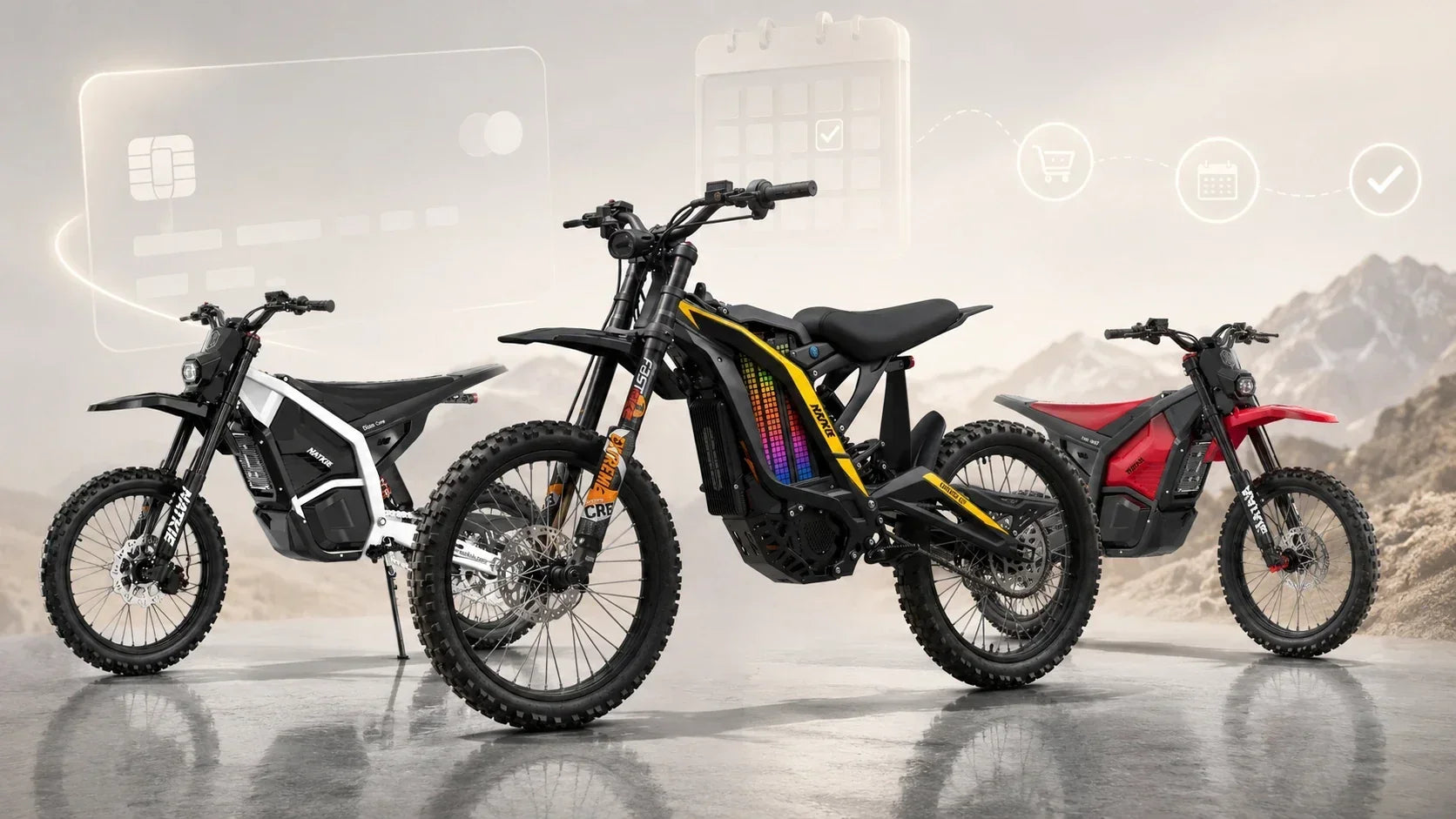
Electric Motorcycle Financing Guide: How to Own an E-Moto Without Paying Everything Upfront
A high-performance electric motorcycle can deliver instant torque, quiet off-road riding, and fewer routine engine-maintenance tasks than a gas-powered dirt bike. The upfront price, however, can still make riders hesitate.
That is where electric motorcycle financing and Buy Now Pay Later services may help. Instead of paying the entire order amount at once, eligible buyers may be able to divide the cost into scheduled payments through a provider available at checkout.
Financing does not reduce the price of the bike, and approval is not guaranteed. It can make the initial cost easier to manage while leaving room in the budget for protective gear, transportation, maintenance, and other riding expenses.
This guide explains why electric motorcycles are growing in popularity, why capable e-motos cost more than standard e-bikes, how common electric motorcycle payment plans work, and how to choose the right model from our NATKIE lineup.
Important: In this guide, “e-moto” refers mainly to high-performance electric dirt bikes and off-road electric motorcycles. Our bikes are designed for off-road riding rather than public-road commuting.
1. The Growth of Electric Motorcycles
Electric motorcycles are part of a wider move toward electric two-wheelers. The International Energy Agency reported that global electric two-wheeler sales reached almost 10 million in 2025. Its category includes motorcycles and scooters, so it is broader than electric dirt bikes alone, but it shows how quickly electric riding is becoming more familiar to buyers. See the IEA Global EV Outlook for more detail.
Riders are drawn to immediate electric torque, simple power delivery, lower operating noise, and fewer routine engine-service tasks. Improvements in batteries, controllers, suspension, and braking have also made electric platforms more capable on demanding terrain.
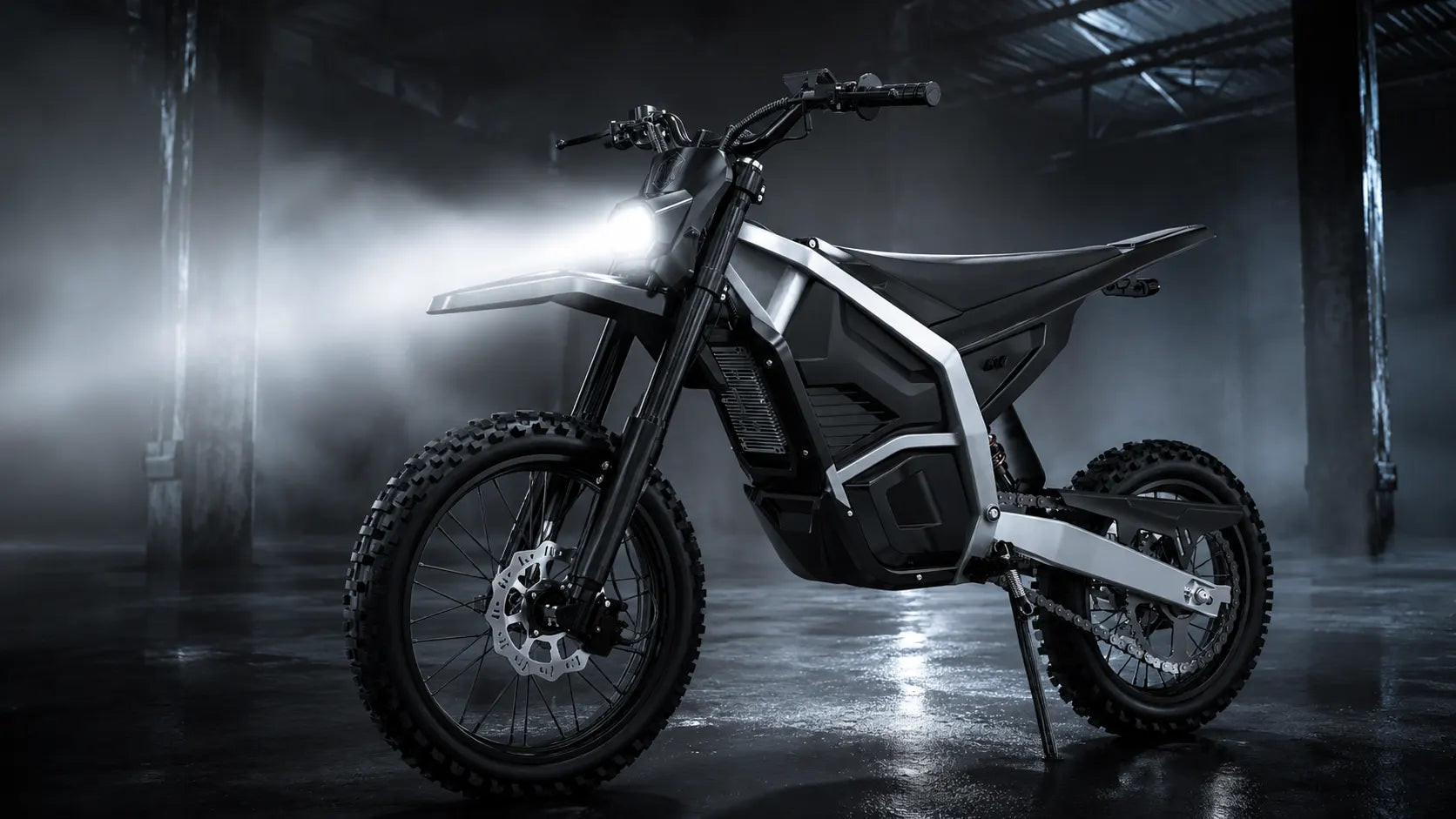
An off-road e-moto is not simply a larger commuter e-bike. High-performance models use motorcycle-style frames, substantial battery packs, hydraulic suspension, off-road tires, and braking systems designed to manage greater speed, weight, and impact.
As the category grows, more riders are also researching e moto financing, monthly payments, Klarna, and Afterpay. The question is no longer only whether an electric dirt bike has enough power. Buyers also want to know how to fit the right model into their budget without paying everything upfront.
2. Why Are High-Performance E-Motos Expensive?
A commuter e-bike is mainly designed for efficient travel on relatively smooth surfaces. An off-road electric motorcycle must handle loose dirt, repeated impacts, steep climbs, heavier loads, and stronger braking forces.
| Cost Driver | Why It Matters |
|---|---|
| Motor and controller | High-output systems must deliver and regulate substantial power under demanding riding conditions. |
| Battery pack | Larger lithium-ion packs require more cells, battery management, protective construction, and suitable charging hardware. |
| Frame and suspension | Off-road chassis and hydraulic suspension must withstand vibration, impacts, and uneven terrain. |
| Brakes and drivetrain | Higher speeds and vehicle weight require stronger braking, chain, sprocket, and drivetrain components. |
| Wheels and tires | Off-road wheels and tires are designed for grip, durability, and repeated loads on loose surfaces. |
| Shipping and support | A large e-moto is more complex to package, transport, assemble, service, and support than a standard bicycle. |
The battery is often one of the most significant components. It must provide enough energy for range while supplying the current needed for acceleration and climbing. Capacity matters, but so do the battery management system, enclosure, charger, and overall construction.
That is why price should not be the only comparison point. A less expensive bike may not offer better value if it does not fit the rider, provide enough range, or suit the intended terrain.
3. Electric Motorcycle Financing Options
There is no single form of electric motorcycle financing. The options visible to a buyer can depend on the retailer, order value, location, financial provider, and individual eligibility.

| Payment Method | How It Generally Works | What to Check |
| Pay in full | The complete order amount is paid at checkout. | Available cash after budgeting for gear and ownership costs |
| Pay in 4 | The order is usually divided into four scheduled installments. | Initial payment, due dates, service or late fees, and refund process |
| Monthly financing | The purchase may be repaid over a longer period. | APR, finance charge, credit check, term length, and total repayment |
| Credit card or personal loan | Financing is arranged separately from the retailer’s BNPL provider. | Interest rate, fees, repayment period, and total cost |
Paying in full is the simplest option because there is no future payment schedule. A Pay in 4 plan may suit someone who can repay the purchase over a relatively short period, while monthly financing may reduce the size of each payment by spreading the cost over more time.
A lower monthly payment does not always mean a lower total cost. Longer-term financing may include interest or other finance charges, so compare the total amount you will repay rather than focusing only on the amount due each month.
The Consumer Financial Protection Bureau explains that many short-term BNPL products use four installments and may not require a hard credit inquiry. Longer installment products can work differently. Its Buy Now, Pay Later guidance recommends reviewing payment dates, fees, credit terms, and the full agreement before accepting a plan.
Financing Is Not a Discount
An installment plan changes when you pay for the bike. It does not automatically reduce the purchase price.
Before accepting an offer, check the down payment, APR or finance charge, number of payments, due dates, late-payment terms, and total repayment. Taxes, shipping, accessories, and discounts may also affect the final amount shown at checkout.
4. How Klarna and Afterpay Work at NATKIE
Eligible customers may be able to select Klarna or Afterpay when placing an order. The options available depend on the order, location, customer eligibility, and the selected payment provider’s approval process.
Our Buy Now, Pay Later page provides an overview of how these payment methods work. The payment options and terms shown at checkout will apply to your order.
Klarna
Klarna may offer Pay in 4 or monthly financing to eligible customers. Pay in 4 divides the purchase into four scheduled payments, while monthly financing may spread the cost over a longer period.
The exact term, APR, payment amount, credit requirements, and total cost will be shown during the Klarna application at checkout. Review the offer before accepting it and make sure the payments fit comfortably within your budget.
Afterpay
Afterpay may offer Pay in 4 to eligible customers. This generally divides the purchase into four installments, with the first payment collected upfront and the remaining payments charged according to Afterpay’s schedule.
Approval, payment dates, and any applicable fees depend on the individual order. Review the terms shown at checkout before confirming your purchase.
Credit Checks, Fees, and Missed Payments
Credit checks, interest, and fees can vary depending on the provider and payment option. A short Pay in 4 plan may have different terms from monthly financing.
Always review the checkout offer and payment agreement so you understand the due dates, total repayment, and any fees that may apply.
Returns and Cancellations
Before returning a bike or cancelling an order, review our Return & Refund Policy and contact our support team when required.
It may take time for a return or cancellation to appear in your Klarna or Afterpay account. Continue checking your payment schedule until the provider confirms that it has been updated.
5. Choose the Right E-Moto Before Choosing the Payment
Financing should make the right bike easier to purchase. It should not encourage a rider to choose more size, speed, or power than they can safely manage.
Start With Rider Fit and Experience
Rider height, bike weight, wheel size, seat position, and chassis dimensions all affect balance and control. A bike that is too large can be difficult to manage on uneven ground, while one that is too small may feel cramped or unstable.
Experience matters just as much. A compact platform may feel more manageable for a rider developing off-road skills. A larger bike with stronger acceleration requires more confidence, judgment, and throttle control.
Our electric dirt bike buying guide explains how to evaluate fit, motor power, suspension, brakes, terrain, and ownership needs.
Think About Where You Will Ride
Consider whether the bike will be used on private property, closed-course tracks, designated OHV areas, tight trails, or more open terrain. Different environments place different demands on the rider and the bike.
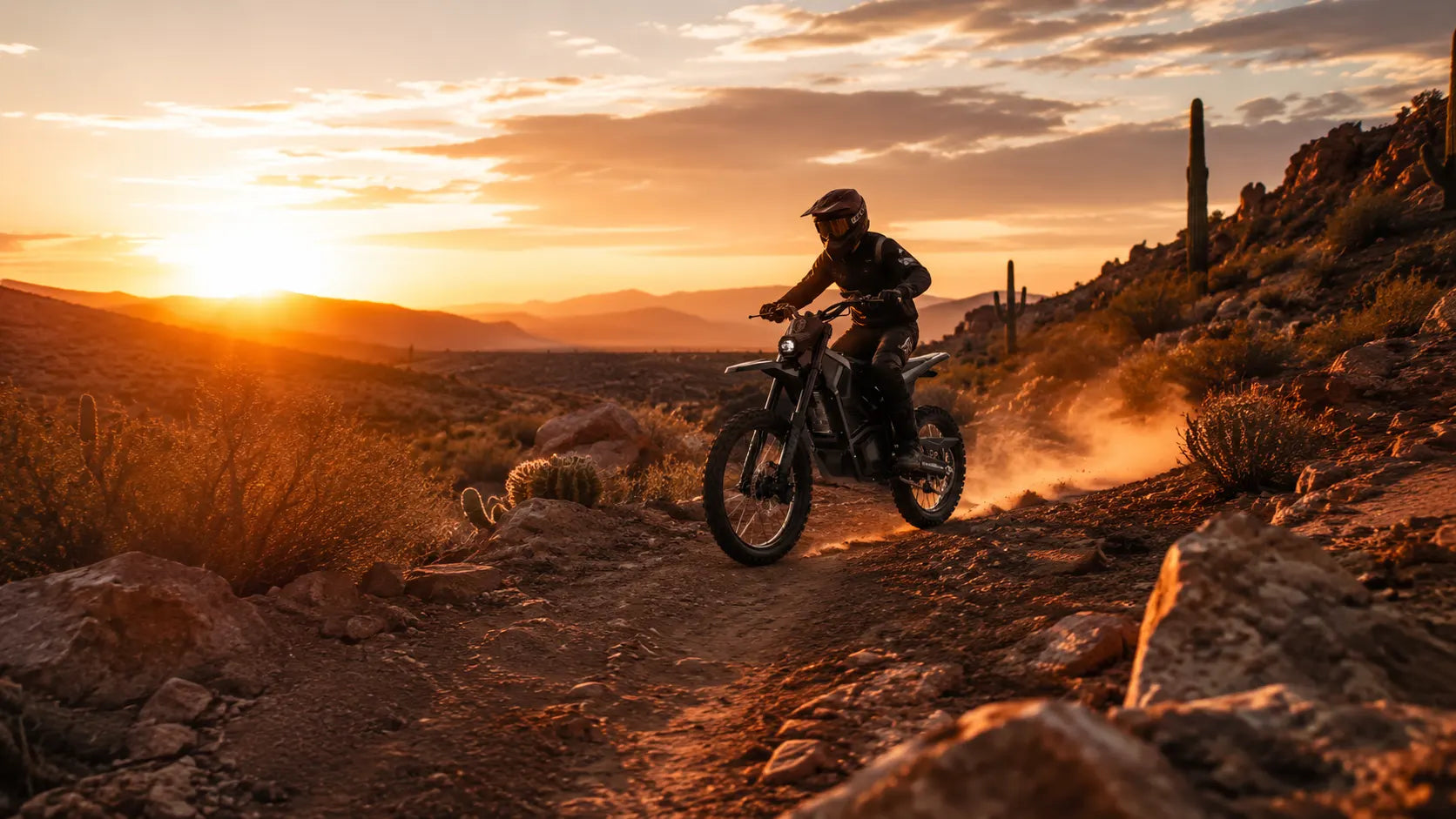
NATKIE electric dirt bikes are designed for off-road use. Check local rules covering vehicle use, rider age, helmets, registration, permits, and legal riding locations before buying.
Evaluate Range Realistically
Published range figures are useful for comparing models, but real-world results vary. Speed, terrain, elevation, temperature, rider weight, tire pressure, and repeated acceleration can all affect battery use.
Choose a bike with enough range for your normal ride rather than treating the maximum published figure as a guaranteed result.
6. Which NATKIE E-Moto Fits Your Needs?
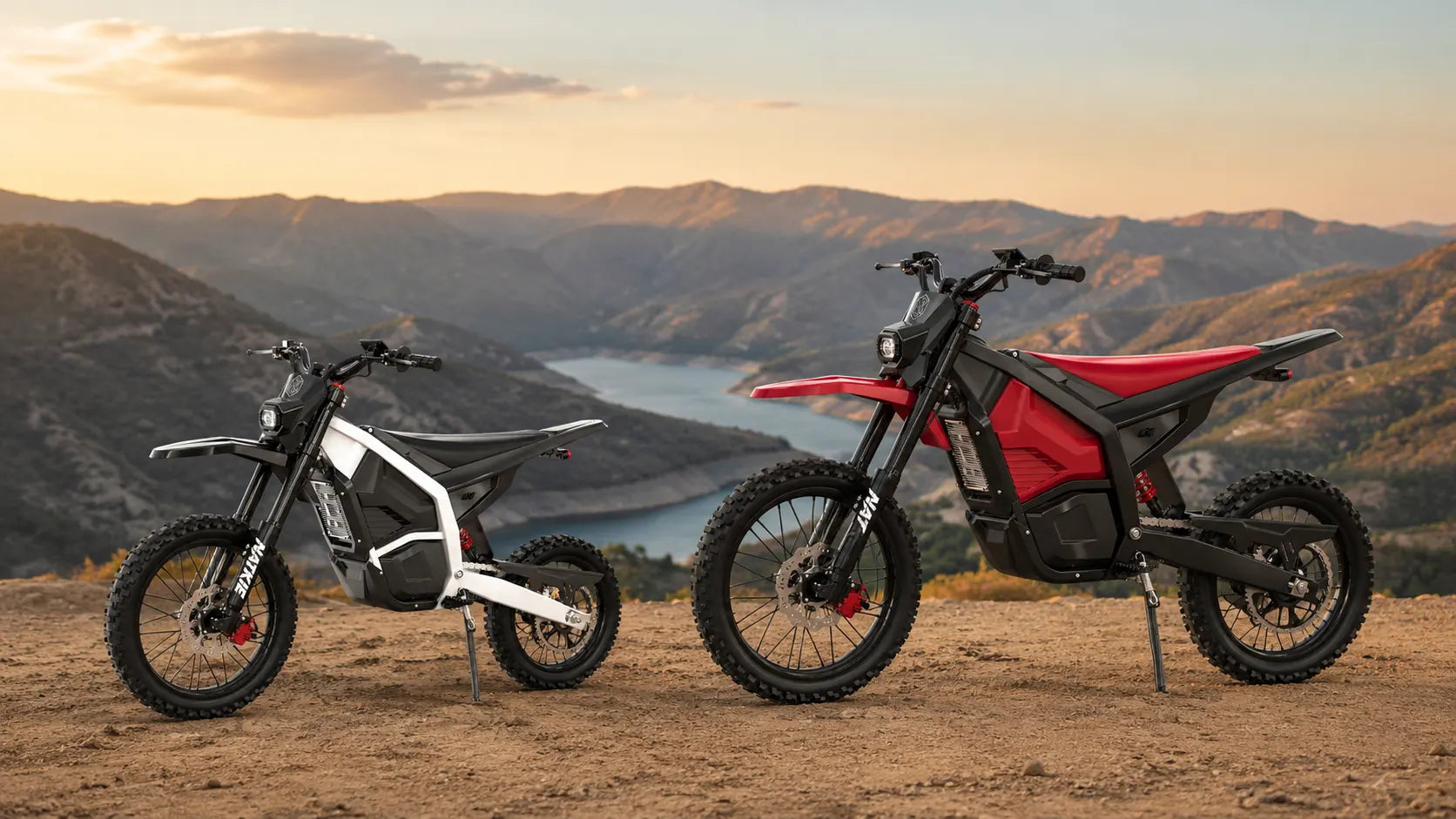
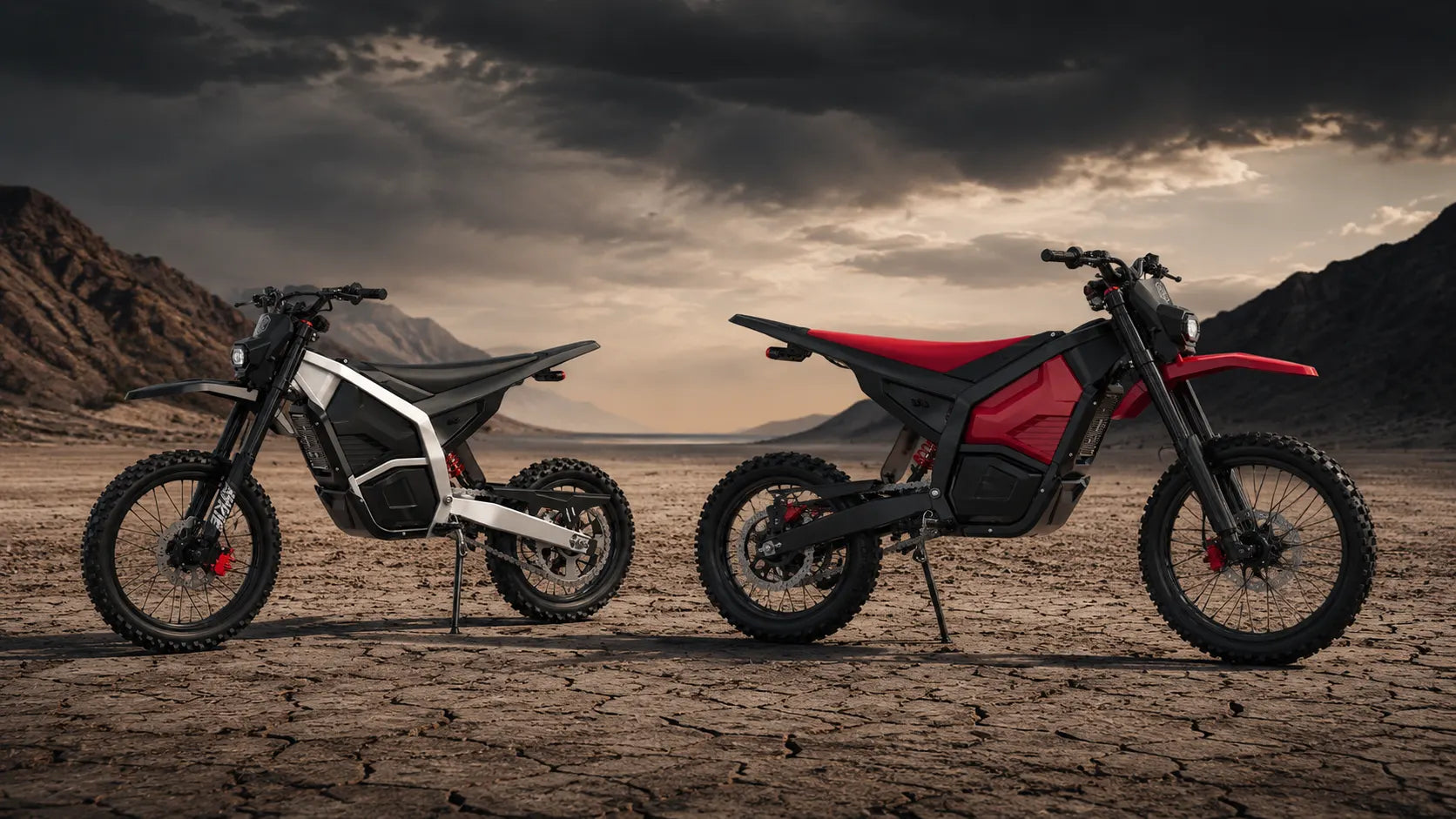
Here is how our current NATKIE lineup compares.
| Model | Current Published Specifications | Suitable Starting Point |
| NATKIE RISE Mini | 3120W peak motor, 48V 27Ah battery, up to 42 MPH, published range of 20–55 miles, rider height 4'6"–6'0" | Riders who meet the fit, experience, supervision, safety, and local-use requirements for a compact high-performance bike |
| NATKIE RISE Core | 5700W peak motor, 60V 30Ah battery, up to 52 MPH, published range of 30–62 miles, rider height 4'8"–6'4" | Riders with suitable experience who want a larger mid-size platform for more demanding recreational terrain |
| NATKIE Vortex N1 | 8000W peak motor, 72V 30Ah removable battery, up to 50 MPH, published range of 35–60 miles, rider height 5'5"–6'5" | Experienced adult riders looking for a full-size, high-output off-road motorcycle |
RISE Mini: Compact Does Not Mean Low Performance
The RISE Mini is the most compact model in our lineup, but it is not a toy. Its 3120W peak motor and published top speed of up to 42 MPH mean that rider readiness must be taken seriously.
Readiness should be based on physical fit, maturity, riding experience, throttle control, responsible supervision where appropriate, proper motorcycle safety gear, and local riding rules.
RISE Core: A Balanced Mid-Size Step Up
The RISE Core combines a 5700W peak motor with a 60V 30Ah battery and a 17-inch front and 14-inch rear wheel setup. It offers a larger platform and stronger performance than the RISE Mini without moving directly to a full-size e-moto.
It may suit riders who already have enough off-road experience to manage stronger acceleration and more demanding terrain.
Riders comparing higher-performance options can also read our RISE Core and Vortex N1 guide, which is useful for shoppers researching more powerful or Sur-Ron-style e-moto alternatives.
Vortex N1: Full-Size Performance for Experienced Adults
The Vortex N1 is our full-size, highest-output platform. It uses an 8000W peak motor, a removable 72V 30Ah battery, and 19-inch front and rear wheels.
Even when financing is available, the Vortex N1 should still be chosen based on the rider’s size, experience, and ability to manage a full-size e-moto. The amount approved by a payment provider should not determine which bike is safe or suitable for the rider.
Should You Finance an Electric Motorcycle?
Electric motorcycle financing may make sense when the full payment schedule fits comfortably within your budget, the total financing cost is acceptable, and you have already allowed for protective gear and other ownership expenses.
Paying upfront may be the better option when the funds are available and financing would add significant interest or fees. Neither choice is automatically better. The right approach is the one that helps you purchase a suitable bike without creating an unmanageable payment obligation.
Find the Right Bike and Review Your Checkout Options
Start with the model, not the monthly payment. Choose according to rider fit, experience, terrain, and realistic range needs. Then compare the available payment options, including the first payment, APR, fees, due dates, credit terms, and total repayment.
Explore our Buy Now, Pay Later options, learn more about NATKIE, or compare the RISE Mini, RISE Core, and Vortex N1 before continuing to checkout.
The payment options and terms shown at checkout will apply to your order.
Share: