
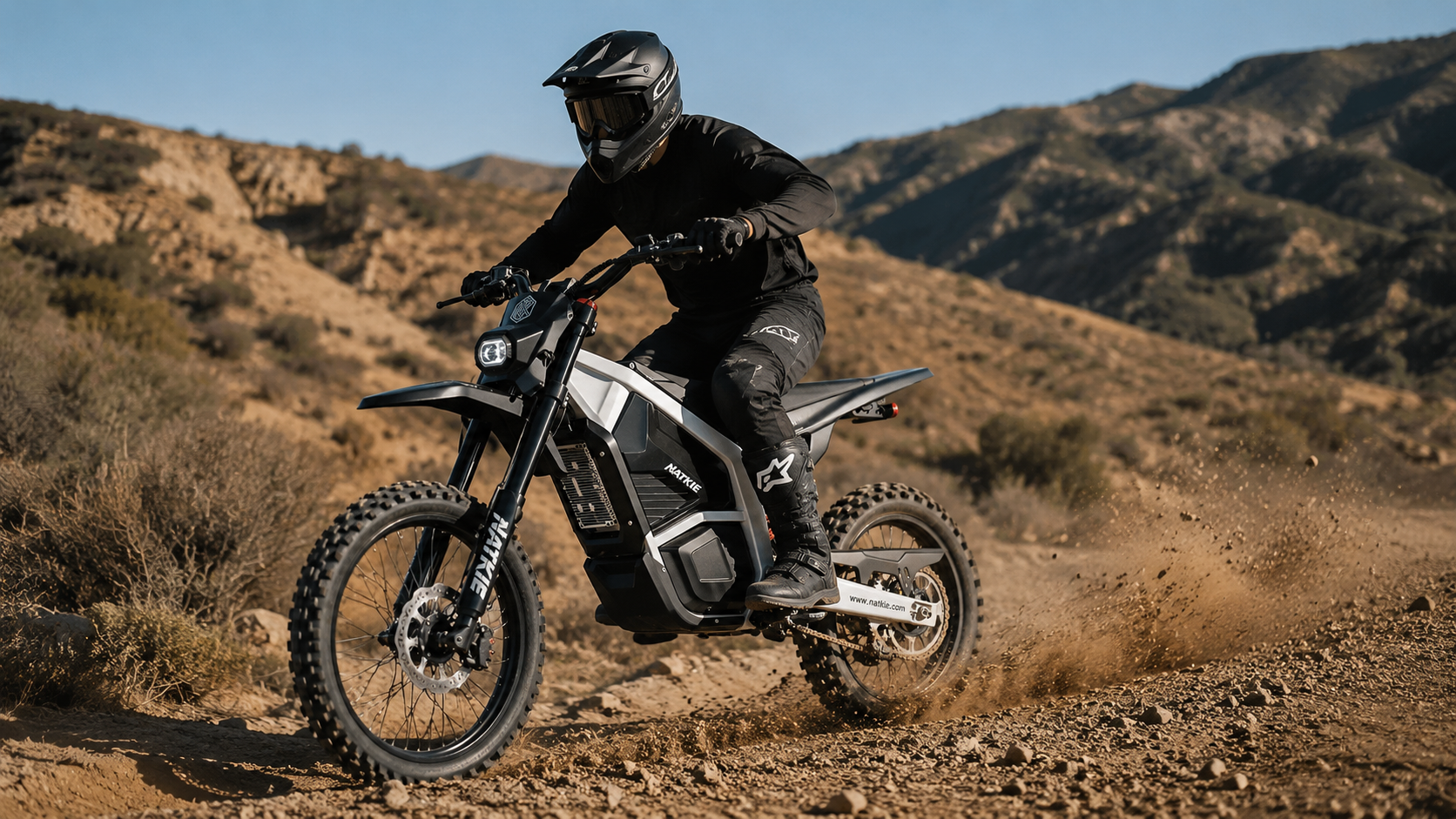
Electric Dirt Bike vs Gas Dirt Bike: What Should You Buy?
The electric dirt bike vs gas dirt bike question comes up a lot for new riders right now, and honestly it makes sense. Both have real strengths and real trade-offs. The right choice depends on how you ride, where you go, and what kind of experience you are after.
At NATKIE we focus on off-road riding, so this guide looks at both options through that lens: trail performance, beginner-friendliness, maintenance, and real ownership.
Electric Dirt Bike vs Gas Dirt Bike: The Biggest Difference
The most obvious difference is how power gets delivered. Gas dirt bikes use a combustion engine with a clutch and gearbox, which means you manage throttle, clutch, and gear shifts to control your speed and torque. For riders who grew up on gas bikes, this feel is natural and satisfying.
Electric dirt bikes use a brushless motor that delivers instant, linear torque the moment you twist the throttle. No clutch, no gear shifts, no warm-up time. You just go. The power delivery feels smoother and more predictable, especially at low speeds on technical terrain.
Gas bikes also run louder, which gives them a more traditional motorsport feel. Electric bikes are significantly quieter, which some riders love and others find takes getting used to.
Which Is Better for Beginners?
For most first-time riders, electric dirt bikes are easier to learn on. The biggest reason is the clutch. Managing clutch engagement while also learning throttle control, braking, body position, and terrain reading is a lot to process at once. Electric bikes remove that variable entirely.
Smooth, controllable torque also makes electric bikes more forgiving on loose dirt. You are less likely to snap the throttle and lose traction compared to the more aggressive power delivery of some gas bikes, especially two-strokes.
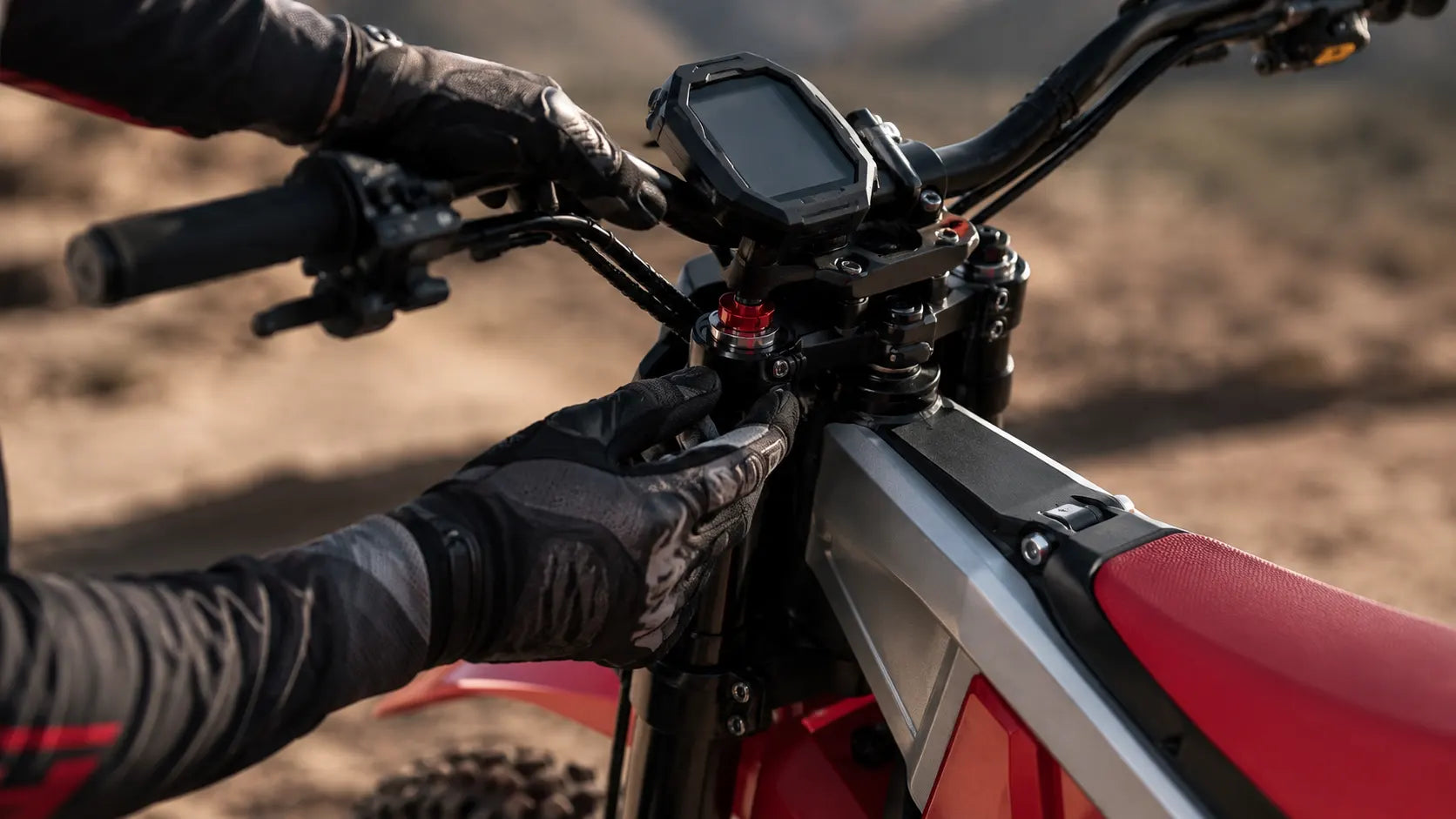
Three speed ride modes on most electric beginner bikes let new riders start in a gentler setting and work up to full power as confidence builds. That kind of adjustability is harder to find on entry-level gas bikes.
Gas bikes are not impossible to learn on, and many experienced riders prefer them for their feedback and traditional feel. But for someone starting from zero, electric removes a lot of the early frustration.
Maintenance and Ownership Cost
This is where electric bikes have a clear advantage over the long run.
Gas dirt bikes need regular oil changes, air filter cleaning, spark plug replacements, carburetor or fuel injection maintenance, coolant checks, and periodic valve adjustments depending on the engine type. These are not difficult jobs but they take time and add up in cost over a riding season.
Electric dirt bikes skip all of that. The main things to maintain are the chain, tires, brake pads, and battery health. There is no oil to change, no carburetor to clean, and no spark plugs to replace. The routine is simpler and faster.
The upfront price of a quality electric dirt bike can be higher than a comparable gas model. But when you factor in fuel costs, maintenance parts, and service time over the first few years, electric ownership often works out to be less expensive overall.
Range Charging and Refueling
This is one area where gas bikes still have a practical advantage. Filling a gas tank takes a few minutes and you can carry extra fuel on longer rides. For multi-day trips or very remote terrain, that flexibility is genuinely useful.
Electric bikes need to charge, which takes between 3 and 6 hours depending on the model and charger. Most modern electric dirt bikes for trail riding offer somewhere between 20 and 60 miles of range per charge depending on terrain, rider weight, and speed.
For most beginner and intermediate trail sessions, that range is more than enough. A typical trail day for a new rider rarely exceeds 30 to 40 miles. The range limitation becomes a real factor mainly for longer adventure rides or back-to-back full-day sessions without access to charging.
If you are mostly doing day rides at local OHV areas, private tracks, or shorter trail loops, electric range is not a problem. If you are planning multi-day remote expeditions, gas has a practical edge.
Noise Trail Access and Ride Feel
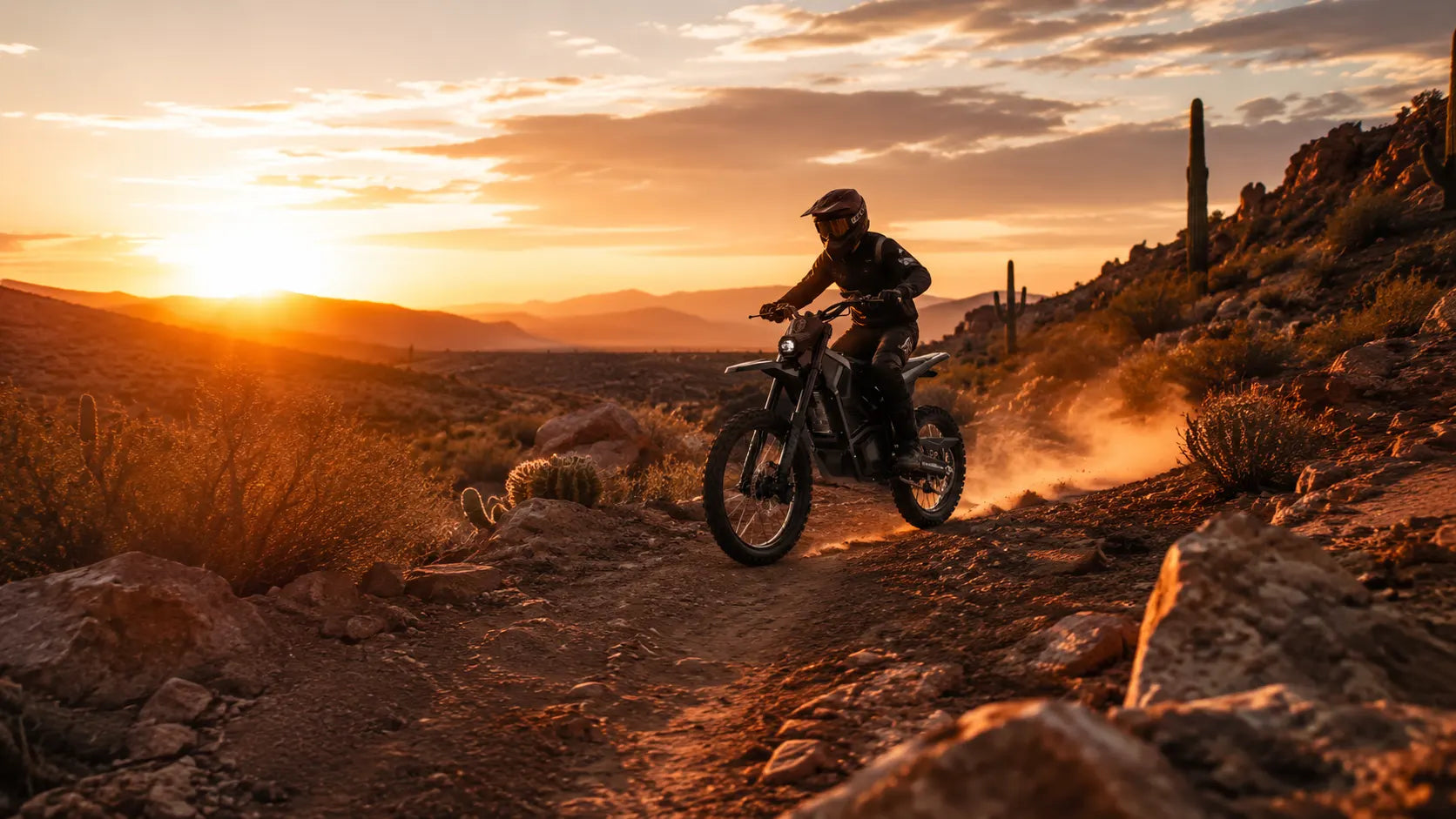
Electric bikes are significantly quieter than gas bikes. This matters in a few ways. Some OHV areas and private riding spots have noise limits, and electric bikes usually fall well under those thresholds. Quieter riding also means less disturbance in natural areas, which can be a factor in keeping trail access open long term.
The quieter ride also changes how the experience feels. Some riders love it because it makes trail communication easier and the riding itself feels more focused. Others miss the sound and feel of a gas engine as part of the experience.
In tight technical terrain, the smooth throttle response of an electric bike often gives riders more confidence. You can modulate power in small increments without worrying about stalling or an aggressive power band catching you off guard.
Weight and Handling
Electric dirt bikes have gotten lighter as battery technology improves, but they are still generally heavier than comparable gas bikes because of the battery pack. That extra weight is worth knowing about, especially for smaller riders or riders who spend time in tight, technical terrain where you might need to pick the bike up.
That said, the weight distribution on a good electric dirt bike is often lower and more centralized than a gas bike, which can actually make it feel more stable in corners and at low speeds.
For first-time riders, manageable weight and easy low-speed control matter more than raw lightness. A bike that feels balanced and predictable at 5 MPH is easier to learn on than a light bike with aggressive power.
Which One Should You Buy?
Here is a simple way to think about it:
| Electric | Gas | |
|---|---|---|
| Power delivery | Instant, smooth, linear | Traditional, clutch-dependent |
| Best for beginners | Yes | Steeper learning curve |
| Maintenance | Simple, low cost | More frequent, higher cost |
| Range | 20 to 60 miles per charge | Refuel in minutes |
| Noise | Quiet | Loud |
| Upfront cost | Often higher | Often lower |
| Long-term cost | Usually lower | Higher with fuel and maintenance |
| Off-road feel | Smooth and controlled | Traditional and raw |
| Best for | Beginners, trail riders, family riding | Experienced riders, long remote rides |
Choose electric if you want an easier learning curve, lower maintenance, quieter riding, and practical trail performance for most beginner and intermediate use cases.
Choose gas if you want fast refueling, very long ride sessions without charging, or the traditional engine experience that experienced riders are used to.
For most first-time buyers, electric is where we would start.
How NATKIE Fits the Electric Choice
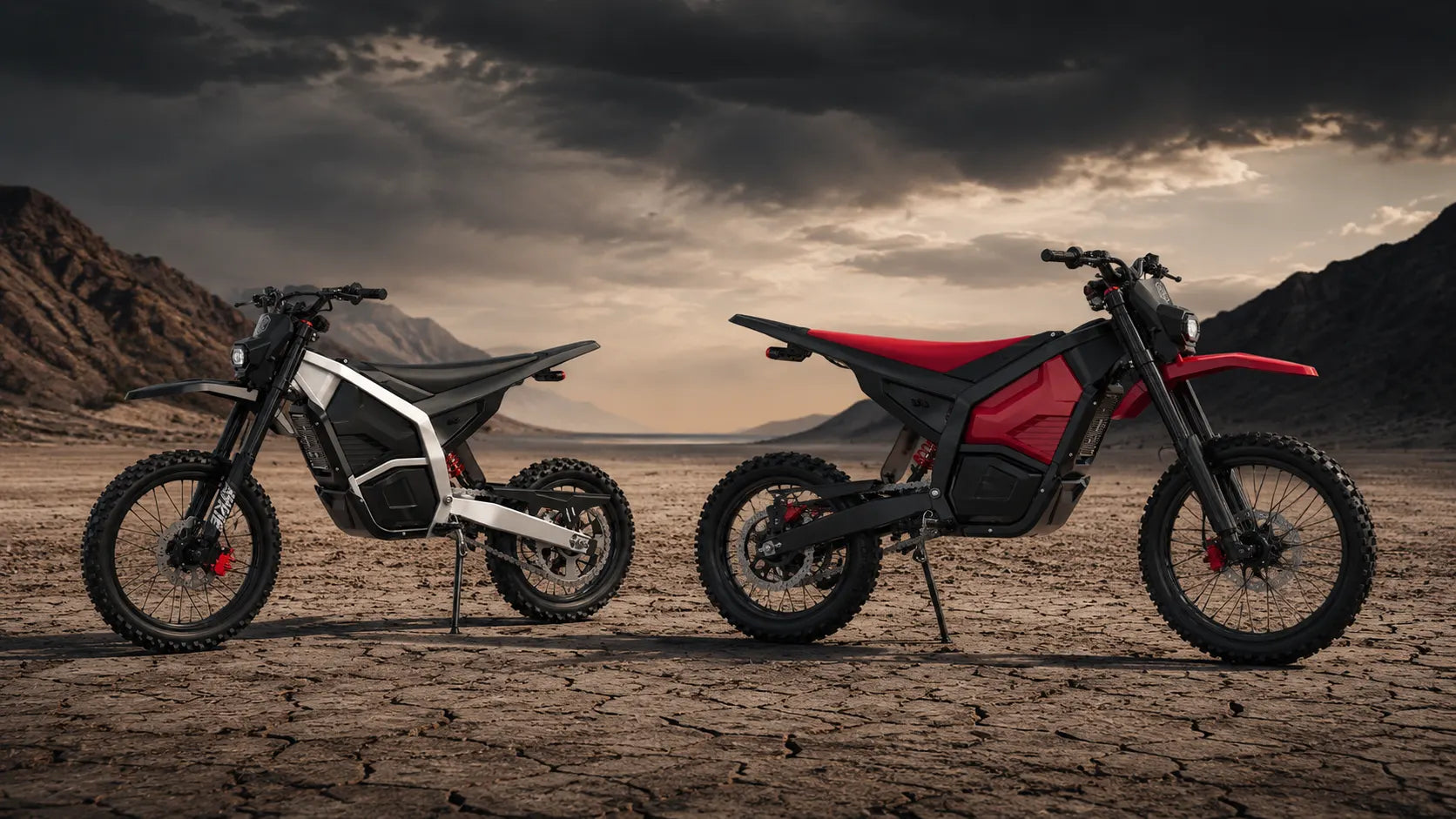
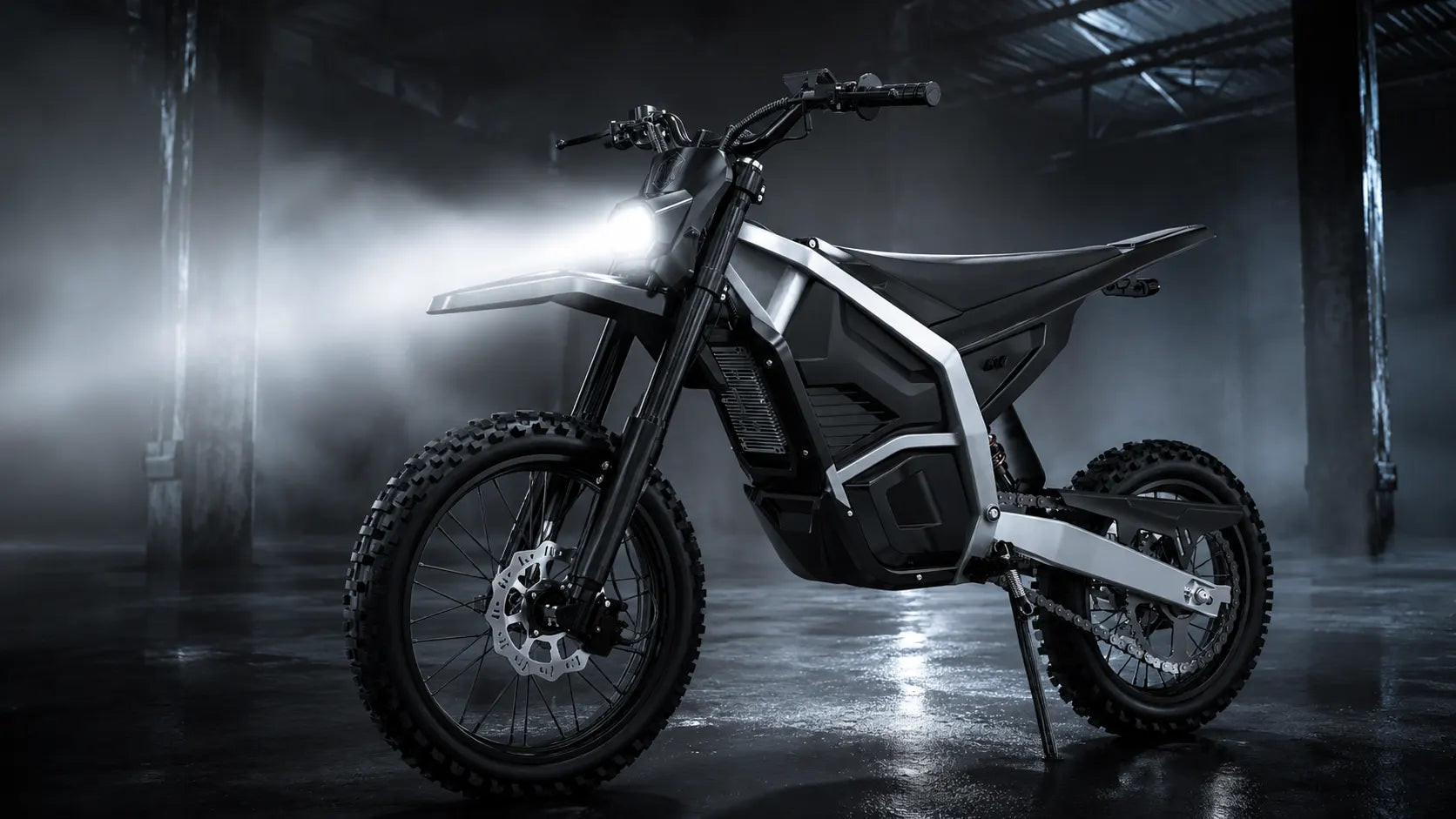
We built NATKIE for riders who want real off-road performance without the complexity of a gas engine. Our bikes are designed for dirt trails, private tracks, and designated OHV areas, not streets or sidewalks.
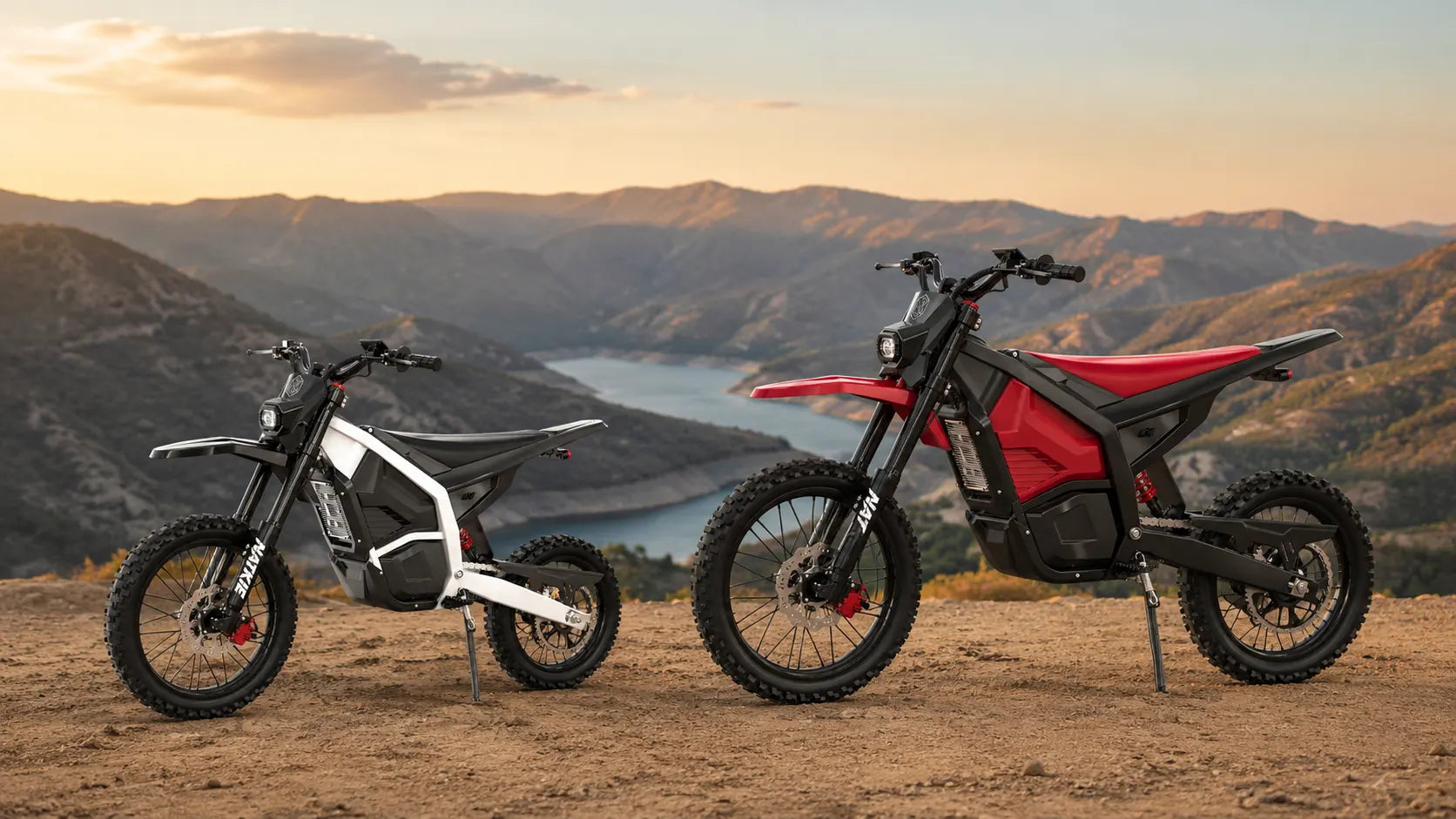
The Rise Mini at $1,299 is built for beginner riders and teens. It runs a 3120W QS mid-drive motor, hits 42 MPH, and delivers 20 to 55 miles of range on a 48V 27Ah battery. Three speed levels let you start slow and build up.
The Rise Core at $1,899 is for riders who want more. A 5700W QS motor, 52 MPH top speed, and 30 to 62 miles of range on a 60V 30Ah battery. Built for intermediate riders who want to push into more demanding terrain.
Explore our full lineup on our official website.
Stay tuned on our YouTube channel for upcoming ride content, trail videos, and real-world performance breakdowns.
All NATKIE bikes are for off-road use only on dirt trails, private tracks, and approved riding areas. They are not street legal.
Share: