
When comparing electric dirt bikes, riders often focus first on motor wattage, torque, battery capacity, or top speed. But understanding direct drive vs mid drive can be just as important when it comes to how a bike actually feels off-road.
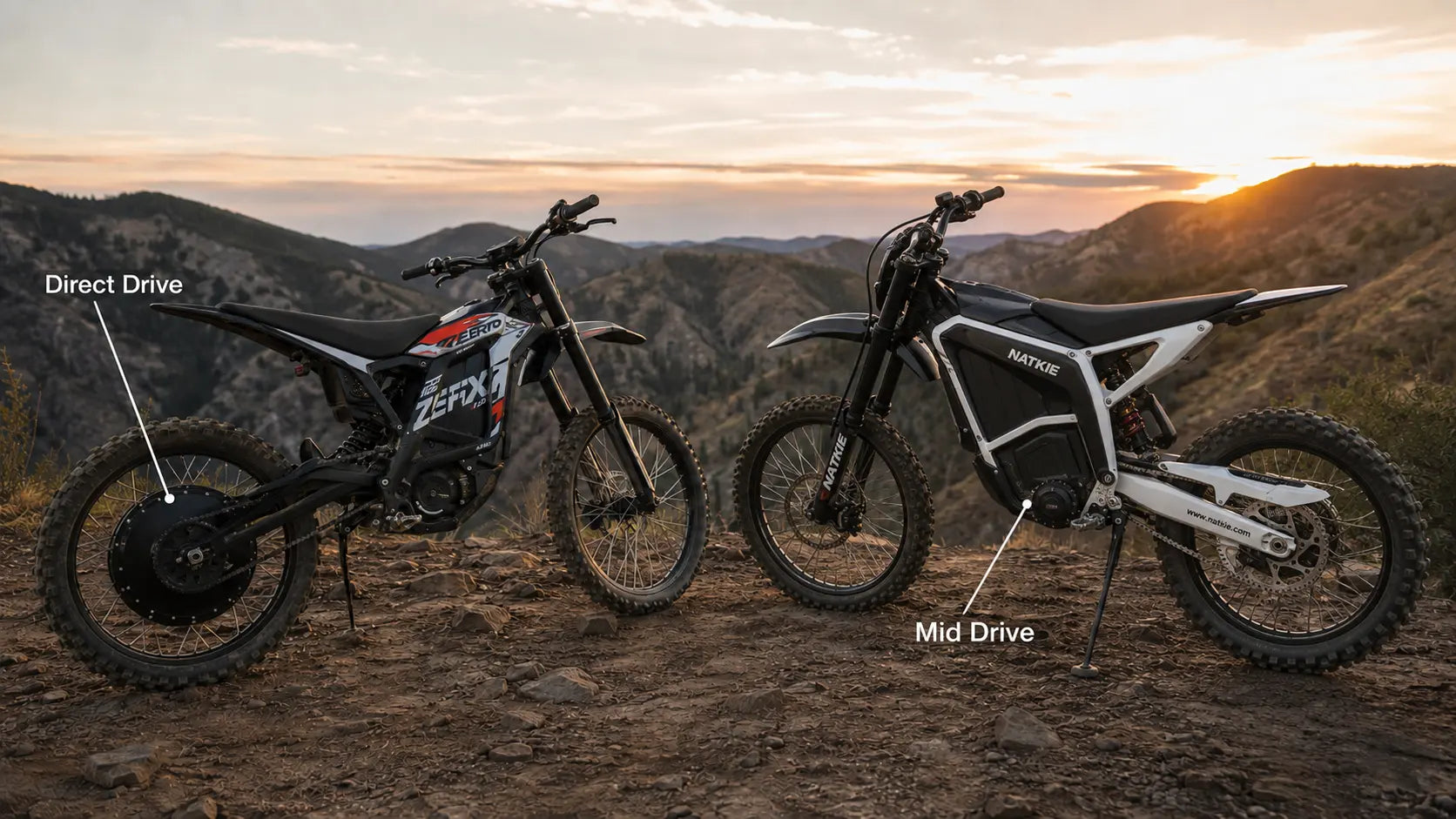
The main difference comes down to where the motor is positioned and how its power reaches the rear wheel. A direct-drive system typically places the motor in the wheel hub, while a mid-drive system positions the motor closer to the center of the bike and transfers power through the drivetrain.
This difference can affect handling, weight distribution, suspension response, climbing performance, maintenance, and overall control on rough terrain. Neither system is automatically better for every rider, which is why comparing direct drive vs mid drive should go beyond motor power alone.
So, what actually matters most when choosing between them?
1. Direct Drive vs Mid Drive: Understand the Basic Difference First
With a direct-drive or hub-drive setup, the electric motor is integrated into the wheel, usually the rear wheel. Power is delivered directly to the wheel without relying on a separate drivetrain between the motor and the wheel.
This design is relatively simple and can reduce the number of mechanical components involved in transferring power.
A mid-drive electric dirt bike, on the other hand, positions the motor closer to the center of the frame. Power is transferred from the motor to the rear wheel through the bike’s drivetrain.
On paper, this may seem like a small difference. On the trail, however, motor position can influence handling, weight distribution, suspension behavior, climbing performance, and power delivery.
2. Direct Drive vs Mid Drive: How Weight Distribution Affects Off-Road Handling
Dirt bikes constantly change direction.
A rider may move from a tight corner into a climb, cross loose gravel, ride through ruts, or suddenly need to correct the bike after hitting a rock or root.
Where the bike carries its weight affects how manageable those movements feel.
A hub motor adds weight directly to the rear wheel. A mid-drive motor keeps more of that mass closer to the center of the bike.
Weight distribution is one of the most noticeable differences when comparing direct drive vs mid drive on technical terrain.
Centralized weight can help create a more balanced feel when cornering or changing direction. It can also make the bike feel more predictable when the terrain becomes technical.
This does not mean that every mid-drive dirt bike will automatically handle better than every hub-drive model. Frame geometry, battery placement, wheel size, suspension, and overall bike weight still matter.
3. Direct Drive vs Mid Drive: Torque Delivery and Power Control
Torque is one of the most advertised specifications in the electric dirt bike market. It is easy to see a large torque figure and assume that the bike with the highest number must be the strongest option.
What matters is not only how much torque the motor can produce, but also how effectively that power reaches the rear wheel and how controllable it feels to the rider.
Mid-drive systems transfer power through the drivetrain, which can make them especially useful when strong pulling power is needed at lower speeds. That becomes important on steep climbs, loose dirt, or rough trails where controlled acceleration can matter more than maximum speed.
A powerful motor that delivers its performance too aggressively may actually be more difficult to ride.
When comparing direct drive vs mid drive, riders should avoid assuming that the highest wattage or torque number automatically means the best electric dirt bike.
4. Direct Drive vs Mid Drive: Suspension and Rear-Wheel Weight
Another important difference becomes noticeable when the trail gets rough. The suspension needs to allow the wheels to react quickly to bumps, rocks, roots, holes, and changing surfaces.
When a motor is located inside the rear wheel, the wheel assembly becomes heavier. This extra weight is often described as unsprung weight, because it moves with the wheel rather than being supported by the bike’s suspension.
A heavier rear wheel can require the suspension to work harder as the terrain changes.
With a mid-drive system, the motor is mounted to the frame instead. This allows the rear wheel to remain lighter and potentially respond more freely to uneven terrain.
For casual riding on relatively smooth trails, the difference may not be dramatic.
For more technical riding, however, suspension performance and rear-wheel control can become much more important.
This is another reason why direct drive vs mid drive becomes more important as the terrain gets rougher.
5. Direct Drive vs Mid Drive: Where Direct Drive Still Has Advantages
Mid drive has several off-road benefits, but that does not make direct drive a poor design.
One of its main advantages is simplicity.
Because the motor powers the wheel directly, fewer drivetrain components may be involved in transferring power. For recreational riders, this can mean a straightforward setup with less attention required for parts such as chains and sprockets.
Direct-drive systems can also be quiet and suitable for riders who mainly use easier trails, private land, or relatively flat terrain.
Mid-drive systems, by comparison, transfer motor power through the drivetrain, so components such as the chain and sprockets remain important maintenance items.
The direct drive vs mid drive choice therefore depends on whether you prioritize mechanical simplicity or more technical off-road performance.
Direct Drive vs Mid Drive Example: NATKIE RISE Mini
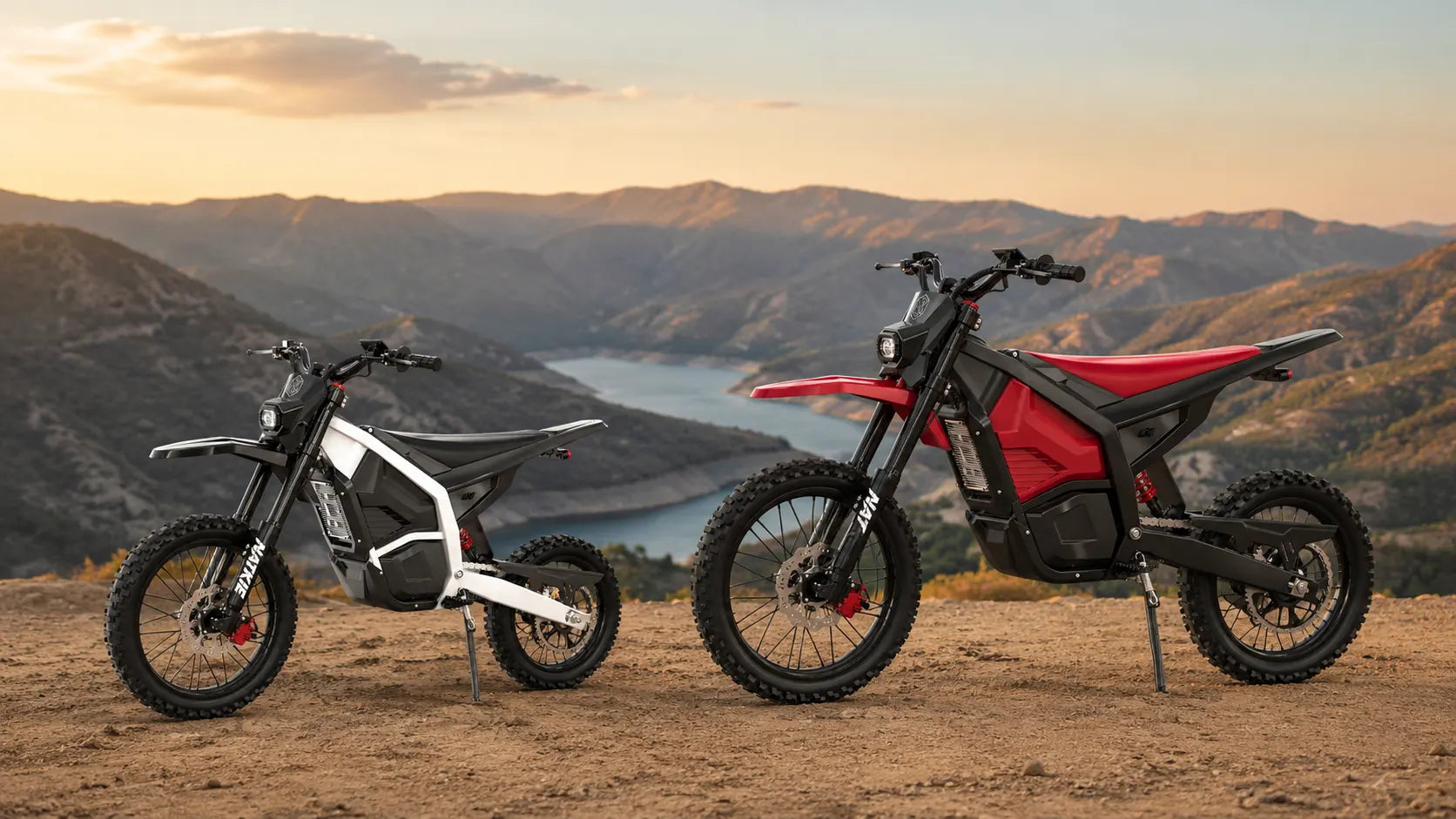
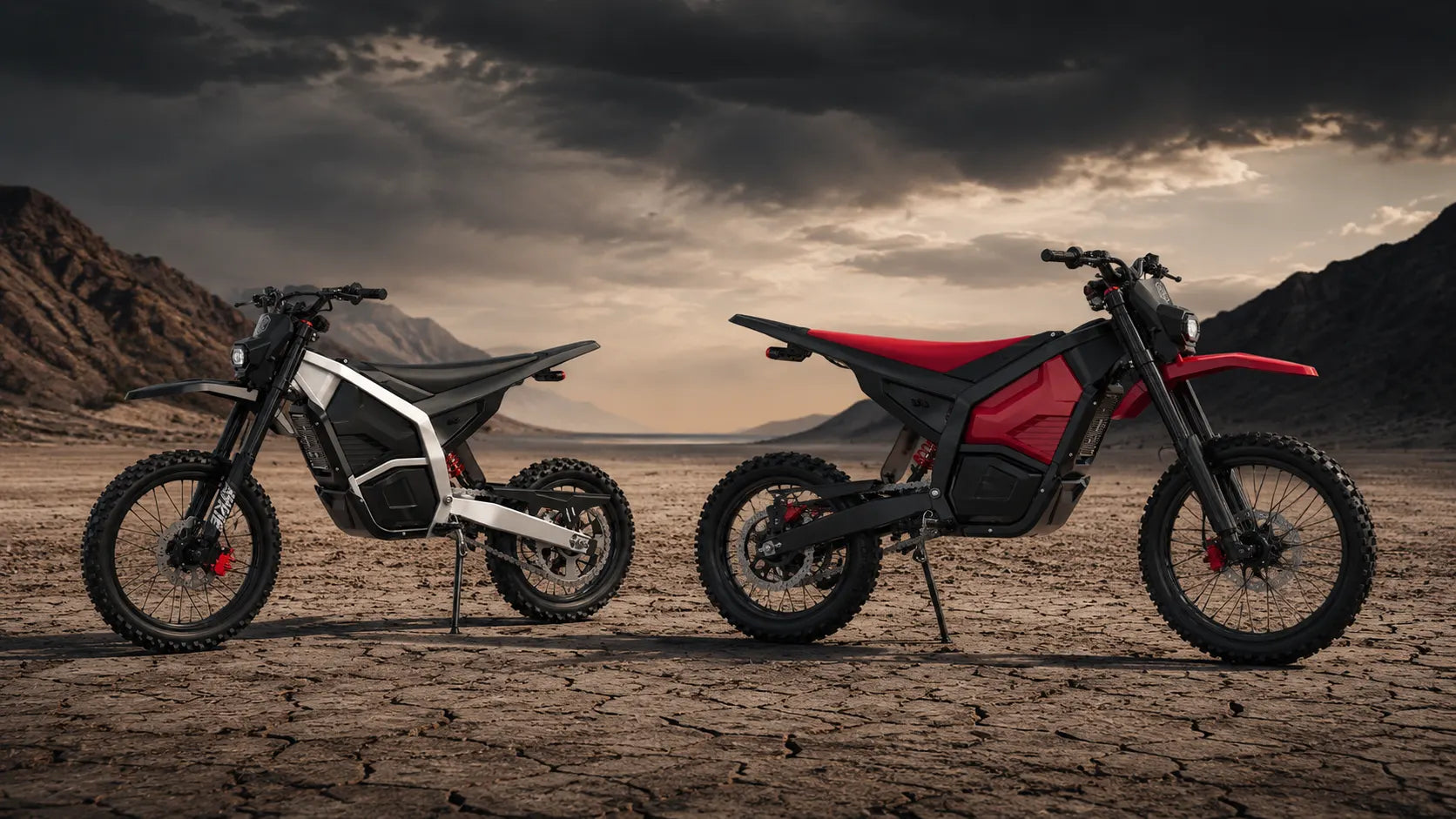
One example of this type of setup is the NATKIE RISE Mini 3120W Off-Road Electric Dirt Bike.
The RISE Mini uses a 3120W peak mid-drive brushless motor rather than placing the motor inside the rear wheel. It produces up to 210 N·m of torque and has a listed top speed of 42 mph.
Those numbers show that it offers substantial performance, but in a direct drive vs mid drive comparison, the important point is how that performance is delivered.
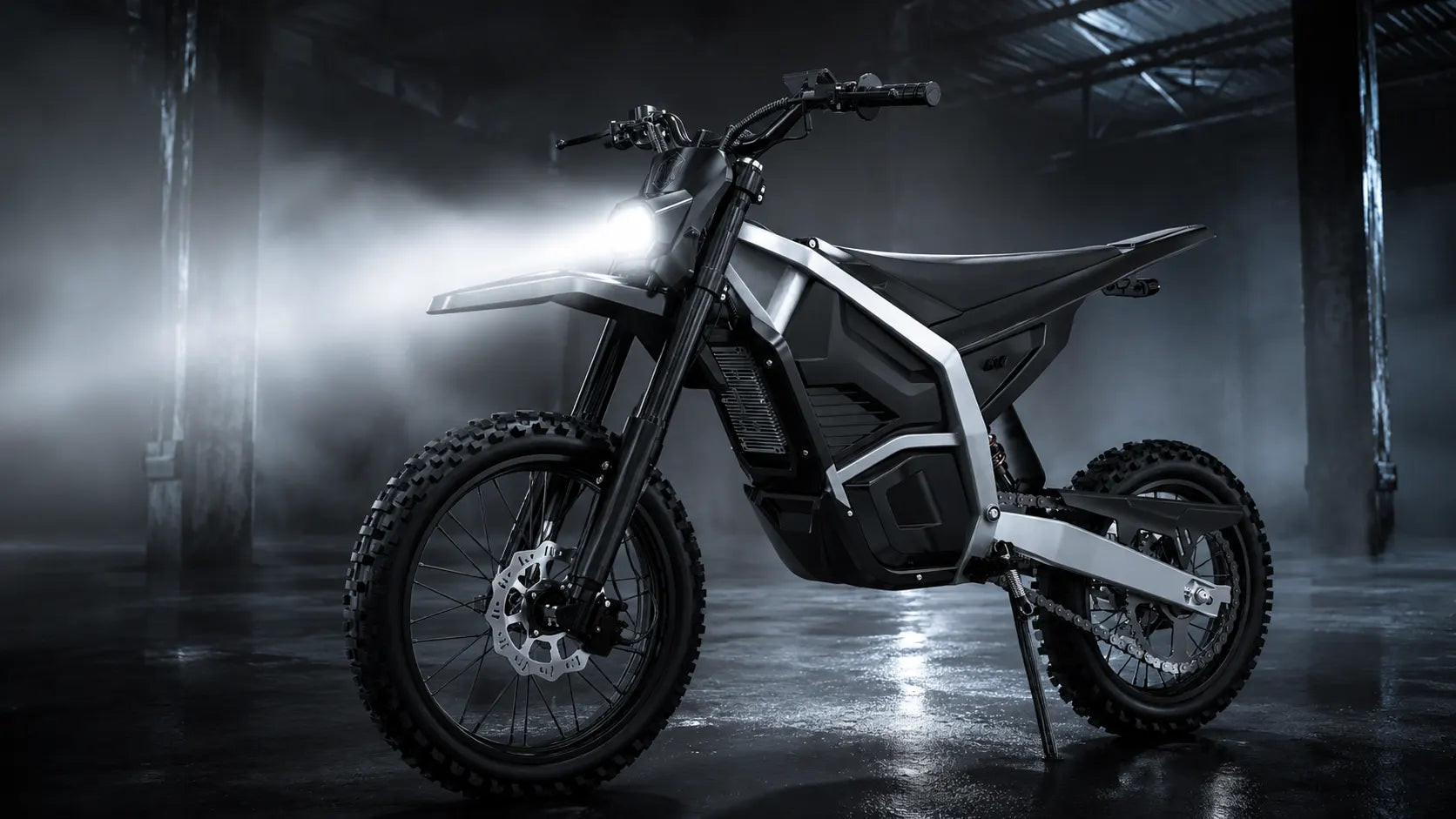
The mid-drive layout positions the motor within the main structure of the bike, keeping the rear wheel separate from the motor itself. This can help support more centralized weight distribution while allowing the rear suspension and wheel to respond to changing terrain.
The RISE Mini also includes three speed modes and reverse, giving riders more flexibility in how they use the available power.
Battery and Range in a Direct Drive vs Mid Drive Comparison
Motor layout is important, but it should not be considered on its own. The NATKIE RISE Mini uses a 48V 27Ah lithium-ion battery, with a listed range of approximately 20–55 miles depending on rider weight, terrain, speed, and riding mode.
Charging time is approximately 3–5 hours.
Actual range can vary considerably when riding off-road. Steep climbs, loose surfaces, aggressive acceleration, and higher speeds can all increase energy use. This is why battery size and riding style should be considered alongside the motor system.
Suspension and Off-Road Setup in Direct Drive vs Mid Drive Bikes
A mid-drive motor alone does not make a good electric dirt bike. Suspension, brakes, wheel size, geometry, ground clearance, and overall weight remain equally important.
The RISE Mini combines its mid-drive system with hydraulic front suspension, a rear shock absorber, heavy-duty hydraulic brakes, a 14-inch front wheel, a 12-inch rear wheel, and approximately 9 inches of ground clearance.
Together, these features position it as a bike designed for real off-road use rather than simply a small electric bike with dirt-bike styling.
Still, buyers should evaluate the complete machine rather than choosing a bike because of one specification.
A More Powerful Mid-Drive Option: NATKIE RISE Core
For riders who want more performance, NATKIE also offers the RISE Core. NATKIE lists a 5700W peak motor, 250 N·m of torque, a 52 mph top speed, a 60V 30Ah battery, up to 62 miles of range, and a maximum rider load of 330 lbs. That makes it a much more performance-oriented option than the RISE Mini. For shorter or first-time riders, however, the extra power should be treated as capability rather than a target; the RISE Mini remains the more natural example when compact fit and progressive learning are the priority.
To compare the current lineup, specifications, and other off-road models, you can explore the official NATKIE website.
Direct Drive vs Mid Drive: Which Is Better for Off-Road Riding?
For riders who prioritize simplicity, quieter operation, recreational use, and potentially lower drivetrain maintenance, a direct-drive or hub-drive electric dirt bike can make sense.
For riders who expect steeper climbs, rougher terrain, frequent direction changes, and more technical off-road riding, a mid-drive system can offer meaningful advantages.
Want to see the bikes in action? Visit the NATKIE Official YouTube channel for riding footage, product videos, and more off-road content.
Final Thoughts on Direct Drive vs Mid Drive
When comparing direct drive vs mid drive electric dirt bikes, do not choose a bike based only on the largest motor number. Think about where you will ride, how technical the terrain is, how the bike distributes its weight, how the suspension performs, and how controllable the available power feels.
The NATKIE RISE Mini is one example of how a mid-drive layout can be combined with strong torque, compact dimensions, multiple riding modes, and dedicated off-road suspension. The NATKIE RISE Core offers a more performance-focused alternative, combining a 5700W peak motor and 250 N·m of torque with a larger 60V 30Ah battery, up to 62 miles of range, and a 52 mph top speed—making it better suited to riders looking for stronger performance and more demanding off-road capability.
That does not mean mid drive is automatically the best solution for every rider. For casual riding, the simplicity of direct drive may be exactly what someone needs. Ultimately, what matters more is not simply direct drive vs mid drive. It is choosing a complete bike whose drive system, suspension, power delivery, and overall design match the way you actually want to ride.
Share: